
Yes, you can sell an exotic car that is leased, but the transaction must follow the leasing company's purchase and title-release rules; you cannot sell it as though you already own it. A private sale can require an eligible third-party buyout or your own purchase first, with taxes, contractual charges and title processing addressed before handoff.
- To sell an exotic car that is leased, confirm the lessor's buyout rules before accepting an offer.
- A lease payoff does not automatically authorize a private buyer to acquire the car.
- SV Sourcing suits owners seeking private exotic-car sales coordination, not a public inventory dealership.
- Confirm buyer eligibility, payment instructions and title transfer before releasing the vehicle.
Why this matters
A buyer's willingness to purchase your car does not establish your authority to transfer it. The leasing company owns the vehicle during the lease, and its permitted purchase process determines the route to a sale.
For a sale in 2026, start with current written instructions tied to your account. An old payoff letter or another owner's experience is not approval for your transaction. Gather the lease agreement and the documents needed to sell an exotic car before discussing a firm closing date.
Find the permitted ownership-transfer route before negotiating an unconditional sale. That protects both sides from agreeing to a transaction the lessor will not process.
Can I sell an exotic car that is currently leased?
Yes, provided the transaction follows the lease agreement and the lessor's current requirements. Your first task is to establish who is allowed to purchase the car and who receives the ownership documents afterward.
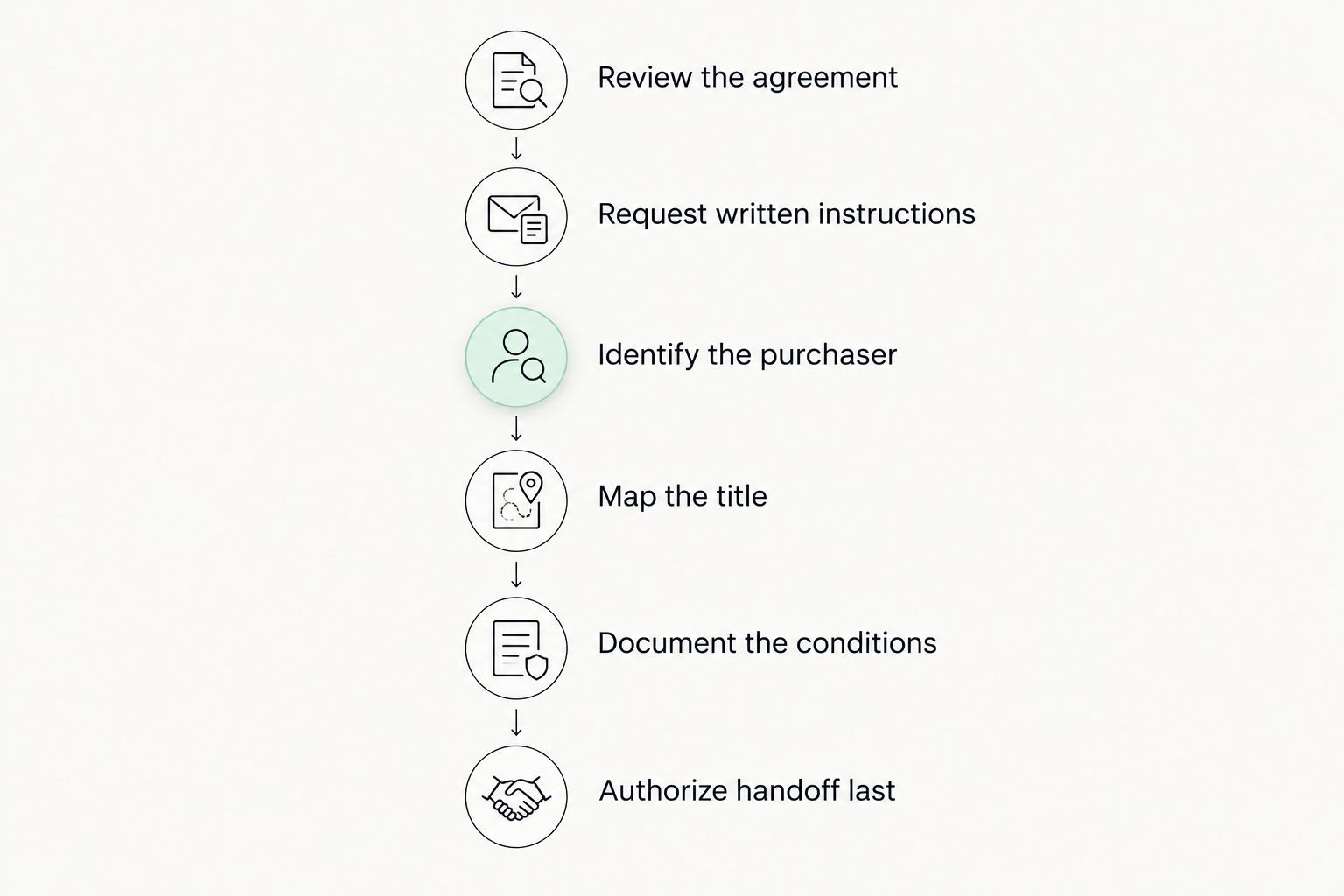
Use this sequence before committing to a buyer:
- Review the agreement. Locate purchase-option provisions, early-termination terms and restrictions on transfers. A lease assumption and a vehicle purchase are different transactions; permission for one does not establish permission for the other.
- Request written instructions. Ask the lessor for an account-specific purchase quote and its validity period. Confirm whether the quote applies to you, a private buyer or an eligible dealer.
- Identify the purchaser. Establish whose name will appear on the purchase documents. Do not assume that someone else's payment changes who is legally purchasing the vehicle.
- Map the title route. Ask who receives the title or electronic ownership record and what must happen before the next transfer. Confirm applicable requirements with the relevant state motor vehicle agency.
- Document the conditions. Make the proposed sale contingent on the required approvals, payment and ownership documents. Give the buyer a clear description of the sequence rather than a promised completion date.
- Authorize handoff last. Confirm cleared funds, the required ownership documents and authority to release possession before arranging collection. A payment screenshot is not confirmation from the receiving institution.
These 6 steps separate buyer interest from an executable closing. Keep the lessor's written responses with the transaction records, rather than relying on a verbal explanation passed through an intermediary.
Which route fits your leased exotic car?
There are 3 routes to evaluate, not 3 options every lessor must offer. Eligibility comes first. Compare the permitted routes only after the lessor confirms which ones apply to your account.
| Route | Best for | Main advantage | Main limitation |
|---|---|---|---|
| Permitted third-party buyout | Owners whose lessor accepts the proposed purchaser | Can avoid an intermediate purchase by the lessee | Purchaser eligibility and title instructions still control |
| Lessee buyout followed by resale | Owners who must acquire ownership before selling privately | Establishes an ownership route for a subsequent private sale | Adds a separate purchase, funding needs and applicable transfer requirements |
| Eligible dealer purchase | Owners whose lessor accepts the proposed dealer | Provides a route where that dealer qualifies to buy | Does not establish permission for a direct private-buyer purchase |
A broker's involvement does not create another ownership route. A broker can coordinate introductions and transaction steps, but the lessor still determines whether the proposed purchaser qualifies.
Do not confuse these routes with returning the car at lease end. A return closes out possession under the lease's return process; it is not your private sale of the vehicle.
Permitted third-party buyout
Best for: an owner whose lessor expressly permits the intended third-party purchaser. Ask whether permission covers an individual buyer, an independent dealer or only specified eligible purchasers. The term third-party buyout alone is not detailed enough.
Confirm whose purchase quote applies and where the title goes. Do not give a private buyer your personal buyout figure as though it establishes that buyer's purchase terms.
The advantage is a potentially more direct ownership path. The constraint is permission: an introduction to a qualified buyer cannot override a restriction in the lease or the lessor's applicable process.
Lessee buyout followed by resale
Best for: an owner who needs to acquire the car before completing a private sale. Treat the buyout and resale as separate transactions unless the lessor and relevant authorities confirm another permitted structure.
This route requires planning for the initial purchase and any applicable tax, registration or title obligations. Ask a qualified tax adviser about your circumstances before committing; do not assume a later resale cancels obligations arising from your purchase.
The advantage is a clearer basis for selling a car you own. The limitation is the extra transaction and the possibility that ownership paperwork is not ready when the buyer wants delivery.
Eligible dealer purchase
Best for: an owner whose proposed dealer qualifies under the lessor's requirements. Verify the purchasing entity, not simply the name of the person arranging the introduction. A private broker and a licensed purchasing dealer are not interchangeable roles.
This route can address a purchaser-eligibility restriction when the named dealer is accepted. It does not justify a side agreement that skips the lessor's required ownership sequence.
Ask who buys the car, who pays the lessor and who owes you any remaining proceeds. Keep those responsibilities explicit before releasing keys or documents.
Why the process varies
The badge on the car does not determine whether a leased sale is permitted. These factors determine the closing structure:
- Lessor restrictions. The leasing company's rules establish whether your intended purchaser is eligible. Confirm the rules for your account rather than relying on a general statement about the manufacturer.
- Contract terms. Purchase options, early termination and lease transfers serve different purposes. Read the provision that actually governs the proposed transaction.
- Purchaser identity. A quote issued to you does not necessarily apply to a dealer or private buyer. Match the written instructions to the entity purchasing the vehicle.
- State requirements. Tax, title and registration procedures depend on the jurisdictions involved. An out-of-state buyer adds another set of requirements to confirm, not a reason to bypass yours.
- Document readiness. Title release and subsequent transfer must fit the transaction sequence. A buyer's preferred collection date does not establish when documents will be ready.
- Quote validity. Use an unexpired account-specific quote for the intended transaction. Reconfirm instructions if the purchaser or closing date changes.
For a 2026 transaction, obtain current confirmation at the point you are ready to proceed. Approval for a different purchaser or a previous transaction is not approval for this sale.
What should you confirm before accepting a buyer's offer?
Separate agreement on the car from agreement on how ownership moves. A serious buyer needs both. Disclose that the vehicle is leased before asking the buyer to commit funds or arrange transport.
Your written transaction plan should identify:
- The vehicle and the party currently entitled to purchase it.
- The lessor's accepted purchaser and current written instructions.
- The recipient of each payment and how receipt will be verified.
- The party responsible for obtaining and transferring ownership documents.
- Any required inspection and the treatment of unresolved findings.
- The conditions for releasing the vehicle and dealing with a failed closing.
Use a purchase agreement appropriate to the actual structure. Have qualified counsel address deposits, cancellation rights and responsibility for obligations where needed. Do not describe a deposit as refundable or nonrefundable without a written agreement supporting that treatment.
A buyer's funds and the seller's authority to transfer ownership are separate checks. Satisfying one does not satisfy the other.
How do you coordinate payment, title and collection?
Build the closing around verified instructions, not convenience. Confirm payment directions directly with the lessor through an established contact channel, especially if account details arrive through another person.
Ask what evidence confirms that the required payment has posted. Then establish what documents authorize the next ownership transfer. A settled lease account and a completed private-sale title transfer are not the same milestone.
Review the private exotic-car title-transfer process alongside the lessor's instructions. State-specific requirements still apply, including when the buyer registers the car elsewhere.
For your 2026 closing file, retain the purchase instructions, payment confirmations, signed agreements and transfer records. Share sensitive account information only with parties who need it for the transaction. A prospective buyer needs a verifiable closing plan, not unrestricted access to your lease account.
Collection comes after the release conditions are satisfied. Do not let a transport booking become the reason to hand over a car prematurely.
Where does private sales coordination fit?
SV Sourcing is suited to owners seeking private exotic-car sales coordination rather than a public inventory listing. The service provides private, off-market sourcing and sales coordination for buyers and sellers in South Florida and nationwide, with one person coordinating the deal.
For a leased vehicle, that service belongs alongside the lessor's requirements, not in place of them. Establish the permitted transaction structure before asking for discreet introductions to serious buyers.
When comparing private exotic-car brokers, ask who represents whom, who communicates with the purchasing parties and which responsibilities remain yours. SV Sourcing's coordination does not replace lessor approval, legal advice or tax advice. No broker should promise an outcome that depends on another party's authorization.
Discuss your private sale
Start with the lease status, vehicle details and intended sale timing.
Can I sell before my lease ends?
Yes, an early transaction is possible when your agreement and the lessor's process permit it. Request the current purchase instructions rather than treating the remaining scheduled payments as the complete amount needed to acquire the vehicle.
For a proposed 2026 sale, distinguish an early purchase from early termination. Ask the lessor which process applies and what obligations remain under that process.
Can the buyer take over my lease instead?
A lease assumption requires the lessor's permission and its specified approval process. It transfers lease responsibilities under the approved arrangement rather than making the transaction a conventional sale of a car you own.
Ask whether you remain responsible for any obligations after an approved transfer. Do not promise the incoming lessee that you are fully released without written confirmation.
Can I complete the sale without buying the car first?
Yes, if the lessor permits the intended purchaser to acquire the car directly. Without that permission, a buyer's willingness to pay the lessor does not establish a valid shortcut around the required ownership sequence.
Obtain purchaser-specific instructions before accepting funds. The closing agreement should reflect the approved route, not an assumed one.
FAQ
Can I sell an exotic car that is leased to a private buyer?
Yes, if the lessor permits that purchaser to acquire the vehicle, or after you complete an authorized buyout and meet the requirements for resale. Confirm the ownership route before accepting an unconditional offer.
Does a lease payoff quote mean I can sell the car?
No, a payoff quote alone does not establish that your intended buyer is eligible to purchase the car. Confirm who can use the quote and who receives the ownership documents.
Can a private exotic-car broker override a buyout restriction?
No, a broker cannot override the lessor's purchase restrictions. SV Sourcing provides private exotic-car sales coordination, while the lease and the lessor's requirements govern the permitted transaction.
Do I have to buy my leased exotic car before selling it?
You must buy it first if the permitted resale route requires you to acquire ownership before transferring it. Ask whether the lessor allows your proposed buyer to purchase directly.
Will I owe tax if I buy my lease and then sell the car?
Tax treatment depends on the transaction and the applicable jurisdiction. Confirm your obligations with the relevant authorities or a qualified tax adviser before committing to a buyout and resale.
Can a buyer collect the car while the title is being processed?
Do not authorize collection until the documented release conditions are satisfied and the transfer arrangement is confirmed. Payment, possession and ownership documents must follow the agreed closing sequence.
What should I send a broker about my leased car?
Start with the vehicle specification, lease status, intended timing and the lessor's confirmed purchase requirements. Share sensitive account documents only through an agreed private process with parties who need them.
One last thing
Ask the lessor one precise question: who is permitted to purchase this vehicle, and where will the ownership documents go? The answer is more useful than a payoff figure alone.
For a private sale in 2026, document that answer before committing to collection. An interested buyer starts the conversation. An approved ownership-transfer route makes the deal executable.