
To sell your exotic car, prepare the title or accepted ownership record, seller identification, a written sale agreement, and any required odometer and state transfer forms. If the car is financed, add a current lender payoff statement and an agreed process for releasing the lien. Service records, inspection reports, and documentation of modifications support the buyer’s review, but they do not replace the paperwork needed to transfer ownership.
- To sell my exotic car, prepare ownership documents, lien information, and the required title transfer paperwork.
- A financed exotic car needs a lender-confirmed payoff and lien-release process before closing.
- Service records support due diligence; they do not establish ownership or replace an inspection.
- SV Sourcing suits exotic-car owners seeking private introductions and coordinated sales rather than a public listing.
What documents do I need to sell my exotic car?
Separate your documents into those that establish authority to sell, those needed to close, and those that help the buyer evaluate the car. Ownership and lien status come first. A detailed maintenance file cannot resolve an unsigned title, an undisclosed lender, or a seller who lacks authority to transfer the vehicle.
Use this checklist for a private sale in 2026. Confirm the final requirements with the state motor vehicle agency responsible for the transfer and, when applicable, the lender.
| Document | Purpose | What to check before closing |
|---|---|---|
| Title or accepted ownership record | Establishes the recorded owner and supports transfer | Owner name, VIN, title status, liens, and required signatures |
| Seller identification | Connects the seller to the ownership record | Name consistency and authority to sign |
| Sale agreement or bill of sale | Records the transaction terms | Parties, vehicle, disclosures, payment conditions, and handover |
| Odometer disclosure, when required | Records mileage for the transfer | Correct reading, applicable disclosure, and signatures |
| Lender payoff statement, if financed | Establishes the lender’s settlement instructions | Validity period, verified instructions, and lien-release process |
| State transfer forms | Completes jurisdiction-specific requirements | Current forms, signatures, and any notarization requirements |
| Service and inspection records | Supports the buyer’s condition review | Dates, mileage, work performed, and unresolved findings |
For a financed car, review how to handle a loan payoff when selling an exotic car before agreeing to a handover date.
Why this matters
A private exotic-car sale involves both a vehicle and a chain of authority. The buyer needs to know who owns the car, who can sign, and whether a lender must be paid before ownership can transfer. You need a closing process that does not leave possession, payment, and title moving independently.
SV Sourcing is for exotic-car owners seeking private introductions and coordinated sales rather than a public listing. That service model supports a discreet transaction; it does not replace the lender’s instructions, state requirements, or the buyer’s independent checks.
For a 2026 sale, use current forms rather than a saved checklist from a previous transaction. A familiar car does not make every transfer identical.
Ownership documents: establish who can sell
Start with the title or the ownership record accepted for your particular transaction. Check the seller’s name, the vehicle identification number, and any listed lienholder. For a modern vehicle with a standardized VIN, compare all 17 characters against the car and the supporting records.
Older collector cars can use identification formats that differ from modern VINs. Do not treat a shorter historical identifier as proof of a problem. Confirm the appropriate identification and transfer requirements for that vehicle.
Prepare the following before accepting a firm closing date:
- Recorded owner: Identify everyone whose signature the transfer requires.
- Seller identification: Confirm that the signing party matches the ownership record or has documented authority.
- Ownership status: Establish whether the title is physical, electronic, missing, or awaiting correction.
- Vehicle identity: Reconcile the title, vehicle identifier, and records before preparing the agreement.
Registration is not a universal substitute for a title. Some vehicles and jurisdictions follow different ownership-document rules, so establish the accepted route before promising delivery.
If the title is lost or contains an error, resolve the replacement or correction process with the relevant agency. Do not assume a bill of sale alone will cure the issue.
Financed cars: add payoff and lien-release instructions
A lender payoff statement is not the same as your regular account balance. Obtain the lender’s current payoff instructions and confirm when they expire. Ask how the lender will release its interest and how the ownership record will reach the next party.
Your closing instructions should answer these questions:
- Who sends payment to the lender?
- How are the lender’s payment details independently verified?
- What evidence confirms that the payoff has been received?
- Who receives the released title or electronic release confirmation?
- What must happen before the buyer receives possession?
Do not treat payment to the lender as proof that the title is already transferable. Payoff, lien release, and title delivery are separate parts of the process. Set the sequence with the lender and buyer rather than relying on assumptions.
For a financed sale in 2026, keep the current payoff statement with the closing file. A statement from an earlier discussion can expire before the parties are ready to proceed.
Sale agreement: record the actual conditions
Use a written agreement that identifies the buyer, seller, and vehicle. Record the agreed payment terms, known disclosures, inspection conditions, included items, and the conditions for releasing the car. The agreement should reflect the transaction the parties intend to complete.
Separate an inspection condition from an unconditional acceptance. If the buyer’s decision depends on an independent inspection, specify how findings will be handled before either party assumes the deal is final. Do the same for unresolved title or lender issues.
A useful agreement addresses:
- Vehicle description: Identifier, model, and the details necessary to distinguish the car.
- Condition disclosures: Known damage, modifications, and issues represented during discussions.
- Included items: Keys, accessories, spare parts, and documents actually included.
- Payment conditions: The agreed method and verification required before release.
- Handover conditions: Responsibility for collection, transport, and possession.
- Outstanding steps: Inspection, payoff, signatures, or other conditions still to be completed.
An as-is clause is not a substitute for accurate disclosures or compliance with applicable law. For unusual ownership arrangements or disputed terms, obtain qualified legal advice before signing.
Transfer forms: confirm the state-specific requirements
The title assignment, odometer disclosure, and any separate transfer forms must match the transaction. Requirements differ by jurisdiction and vehicle circumstances. Confirm where the buyer will title the car and which agency’s instructions apply to each party.
Odometer disclosures can appear on the title or on a separate form. Federal and state requirements, including exemptions, affect what is required. Check the current instructions for the vehicle rather than assuming an exotic or collector car is exempt.
Also confirm whether the transaction requires notarized signatures, an inspection or emissions document, a seller’s notice of sale, or separate handling of plates. These requirements are not interchangeable across states.
For a 2026 closing, complete forms carefully and follow the agency’s correction procedure if an error occurs. Do not improvise corrections on a title or leave required buyer information blank to simplify the handover.
Condition records: support the buyer’s review
Service invoices help a buyer understand what work was performed and when. Organize them by date and mileage. Separate completed maintenance from estimates, recommendations, and unresolved findings so the file does not imply work that never happened.
Include available inspection reports, repair invoices, modification documentation, and relevant records of prior damage. Distinguish an original specification from a later change. If a removed original part is included, record that in the agreement rather than leaving it as a verbal understanding.
A history report and a service file do not replace a pre-purchase inspection. They answer different questions. Records describe documented events; an inspection evaluates the car’s condition at the time it is examined.
Felipe Cimino, CEO and co-founder of SV Sourcing, has identified buyers skipping a pre-purchase inspection as a firsthand concern. His observation supports a clear process recommendation: allow the buyer to assess condition before treating the transaction as complete.
Why the document list varies
The core file stays similar, but the transfer requirements depend on the car and the parties. These factors change what you need to prepare:
- Outstanding finance: A lender adds payoff, release, and title-delivery steps.
- Ownership structure: Joint ownership, a company, an estate, or a trust requires the correct signing authority.
- Title jurisdiction: States use different forms and procedures, including electronic-title processes.
- Vehicle age and history: Older collector cars and imported vehicles require attention to their particular ownership records.
- Buyer destination: An out-of-state or international buyer introduces destination-specific requirements.
- Condition and modifications: Repair history and non-original components affect the supporting disclosure file.
Do not use the longest checklist as a substitute for the right checklist. Identify the applicable requirements before circulating documents or setting a closing date.
How should I organize the documents before closing?
Use a staged process. First establish authority and title status, then support the buyer’s review, then prepare the documents needed to close. Keep originals secure until the agreed transfer process calls for them.
- Ownership check: Reconcile the owner, vehicle identifier, title status, and signing authority.
- Lender instructions: Obtain current payoff and release details if finance remains outstanding.
- Buyer review: Share relevant condition records through an agreed channel and arrange independent inspection.
- Closing documents: Confirm the agreement, required forms, payment conditions, and handover sequence.
- Sale records: Retain the signed transaction documents and complete any required seller notification.
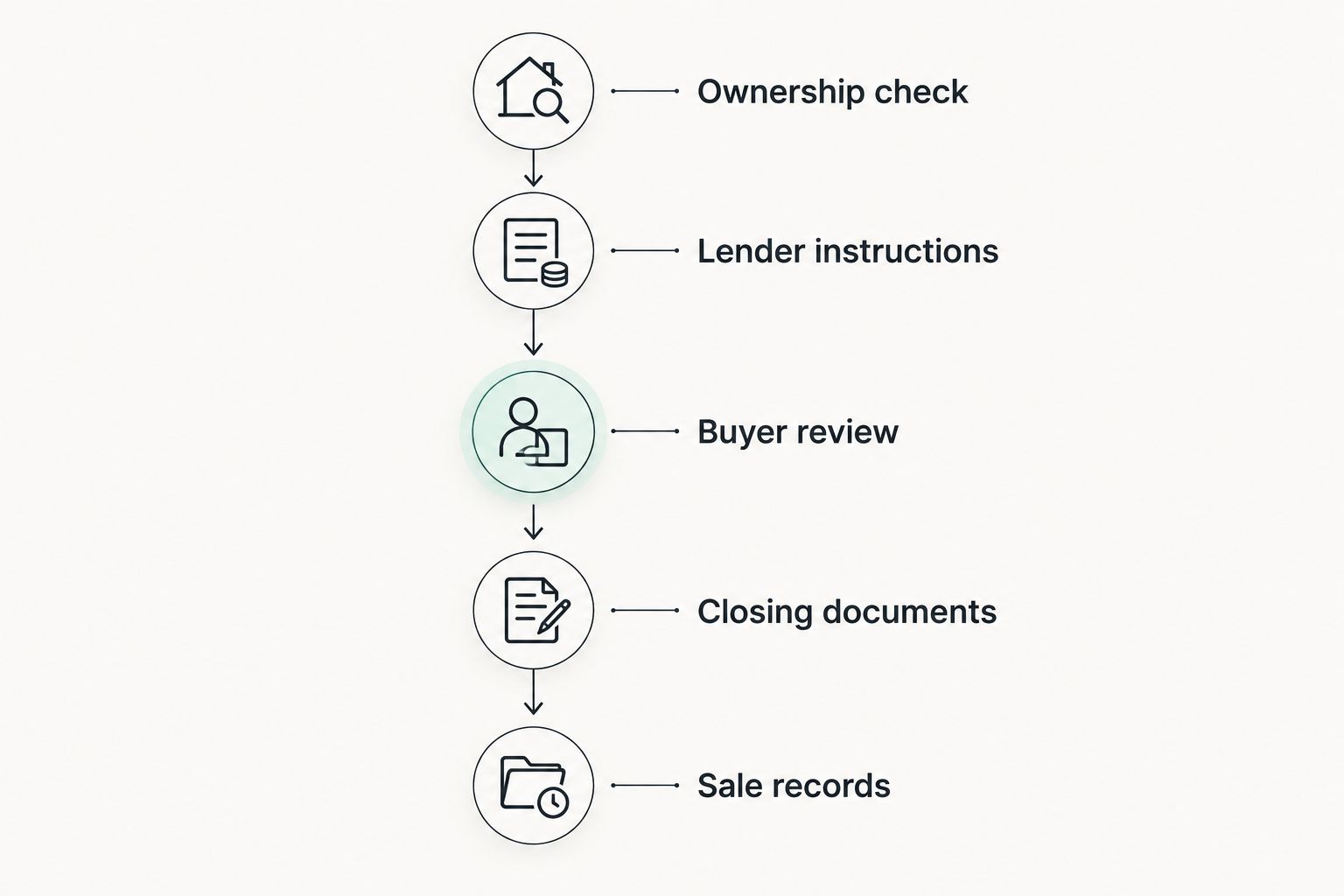
Keep the buyer-facing review file separate from the closing file. The review file supports a decision about the car; the closing file contains sensitive identity, payment, and transfer information.
For your 2026 sale, make document sharing part of the agreed process rather than sending everything with the first inquiry.
Can I sell my exotic car without the title in hand?
You can begin discussions before holding a physical title, but completing the transfer depends on the accepted ownership process. An electronic title or lender-held title is different from a missing title. Identify which situation applies and confirm the required steps before committing to delivery.
Tell the buyer the actual title status. Do not describe the car as ready for immediate transfer when a lender release, replacement document, or ownership correction remains outstanding.
What documents should I share with a potential buyer?
Share enough information to support a qualified buyer’s review, without circulating sensitive documents unnecessarily. Relevant service records, vehicle details, and condition disclosures belong in that review; unrestricted copies of identification and financial information do not belong in an initial inquiry.
Redact unrelated personal information from review copies where appropriate. Keep required information intact on the final documents submitted to the lender or motor vehicle agency. Confirm the recipient and purpose before sending sensitive files.
Do I need different documents for an out-of-state buyer?
An out-of-state buyer needs documents that support both the seller’s transfer and the buyer’s destination-state titling requirements. Confirm the receiving state’s requirements before signing, including any applicable inspection, disclosure, or notarization instructions.
Transport arrangements are separate from ownership transfer. Put the collection responsibilities and release conditions in writing so a transporter’s arrival does not become an unplanned closing deadline.
FAQ
What paperwork do I need to sell my exotic car privately?
Prepare the title or accepted ownership record, seller identification, a written sale agreement, and required odometer and state transfer forms. Add lender payoff and lien-release instructions if the car is financed, plus condition records for the buyer’s review.
Can I sell my exotic car while I still have a loan?
A financed exotic car sale requires a lender-confirmed payoff and lien-release process. Agree how the lender is paid, how the title is released, and when possession transfers before closing.
Is a bill of sale enough to transfer an exotic car?
A bill of sale is not a universal substitute for the required ownership documents. Confirm the title or other accepted ownership record and transfer forms with the relevant motor vehicle agency.
Do service records replace a pre-purchase inspection?
Service records do not replace a pre-purchase inspection. They document recorded work, while an independent inspection assesses the car’s current condition and identifies findings for the buyer to review.
Can SV Sourcing help coordinate a private exotic-car sale?
SV Sourcing provides private, off-market sourcing and sales coordination for exotic and collector cars in South Florida and nationwide. State transfer requirements, lender instructions, and independent due diligence remain separate obligations.
What should I check before signing sale documents in 2026?
Before signing in 2026, confirm the vehicle identifier, signing authority, lien status, required disclosures, and payment and handover conditions. Use current agency forms and resolve discrepancies before releasing the car.
One last thing
A clean document file is not the same as a completed transfer. Signed paperwork, confirmed payment, lender release, and possession each need an agreed place in the closing sequence. None should move merely because the other party says the rest will follow.
Before committing to a collection date, write down what remains outstanding and who is responsible for each step. That short list is more useful than a large folder nobody has reconciled.