
Instead of chasing separate assurances from the seller, transporter and insurer, connect insurance for shipping an exotic car to one written shipment file: the vehicle, carrier, route, covered value and effective dates. Obtain written confirmation from an authorized insurance professional before releasing the car, then document its condition at both handoffs.
- Insurance for shipping an exotic car requires shipment-specific confirmation, not just a carrier’s insurance certificate.
- Match the vehicle, carrier, route, covered value and transit dates before pickup.
- SV Sourcing suits private exotic-car buyers and sellers seeking one person to coordinate the deal.
- Keep condition reports, policy documents and delivery exceptions together for any transit-damage claim.
Why this matters
A transport booking and an insurance arrangement are separate records. Connecting them means confirming that the actual shipment fits the coverage, including loading, unloading and any intermediate storage.
A carrier’s certificate of insurance is evidence of insurance, not a promise that every loss involving your car is covered. The policy terms, exclusions, applicable limits and claim circumstances determine the response.
SV Sourcing provides private exotic-car sourcing and sales coordination in South Florida and nationwide. Deal coordination can keep the parties aligned; coverage advice and binding confirmation belong with the authorized insurance professional.
For a 2026 shipment, work from current documents. A certificate retained from an earlier booking does not establish the coverage for this move.
Before you start
- Prepare the shipment brief. Collect the VIN, ownership details, supporting valuation documents, pickup and delivery addresses, intended dates and transport requirements. Identify who can authorize release and accept delivery.
- Identify the responsible parties. Obtain the contracting transport company’s details, the actual hauling carrier’s legal name, and contacts for your own insurer and the carrier’s insurance representative. Establish who will request coverage and who receives the written confirmation.
- Resolve the non-obvious gap: carrier identity. A transport broker and the hauling carrier are not necessarily the same business. Match the insurance evidence to the carrier taking custody, and ask how substitutions, transfers and storage affect coverage.
You do not need a particular app. Use a shared document or secure folder, with access limited to the people who need the information. The field names below are suggested shipment-file labels, not buttons in a particular insurer’s portal.
Shipment brief
Define the car and the handoff
- Create the shipment record. Use fields labeled Vehicle, VIN, Owner, Pickup contact, Delivery contact, Route and Shipment dates. Match the VIN against the vehicle documents rather than relying on the listing description.
- Describe the physical handling requirements. Record low-clearance concerns, non-running condition, modifications and loose accessories. Tell the transporter and insurance professional about those details before accepting the proposed arrangements.
- Separate the transaction events. Record when payment is confirmed, when the agreement transfers risk, when the carrier takes custody and when the recipient accepts delivery. Ask the relevant adviser to resolve any unclear contract language.
Expected result: Everyone is working from the same vehicle identity, handling instructions and release conditions.
For a private sale, the seller and buyer should each know which responsibilities remain theirs during transport. Do not assume that paying the transporter decides when ownership or risk transfers.
Keep a 2026 shipment checklist in this record. Include the person responsible for each open question, not just a box marked complete.
Coverage confirmation
Match the insurance to the shipment
- Request the carrier’s insurance evidence. Obtain the current certificate and ask the insurance representative to confirm the named insured, relevant cargo coverage, effective dates, limits and deductible. Use independently verified contact details when checking the documents.
- Ask your own insurer about the move. Describe commercial transport, the route, loading and unloading, storage, and any carrier transfers. Request a written explanation of whether your existing policy applies and whether an endorsement or separate transit policy is needed.
- Record the answer in writing. Add fields for Covered vehicle, Insured party, Covered value, Deductible, Coverage period, Covered activities, Exclusions and Claims contact. Retain the issued policy, endorsement or other confirmation supplied by the authorized professional.
Expected result: You have shipment-specific evidence of the applicable coverage, with unresolved questions clearly identified before pickup.
Understand the coverage routes
These are coverage routes to discuss, not interchangeable products. Policy wording controls, and multiple policies do not automatically produce multiple recoveries.
| Coverage route | Best for | What it addresses | Main limitation |
|---|---|---|---|
| Carrier cargo coverage | Checking protection connected to the hauling carrier | Responds according to the carrier’s cargo policy and applicable liability | Limits, exclusions and claim requirements can leave gaps |
| Existing collector or auto policy | Owners checking whether current protection extends to transport | Provides coverage only to the extent the policy includes the shipment | Commercial transport, territory or storage needs specific confirmation |
| Separate transit coverage | Shipments requiring coverage beyond confirmed existing arrangements | Covers the shipment under its own agreed terms | Requires careful matching of value, dates, route and handling activities |
Do not choose by the largest headline limit. Ask whether that limit applies per vehicle, per occurrence or across a load, and whether other vehicles affect the amount relevant to your shipment.
Ask how the policy values a loss. An agreed value, stated amount and actual cash value provision are not interchangeable. For a rare specification or modified car, provide supporting records and ask what the insurer accepts.
Release and delivery controls
Build the release gate
- Close the open conditions. Confirm payment and release authority separately from insurance. Add the carrier’s identity, pickup window, driver contact and coverage confirmation to the file. Do not treat an insurance certificate as payment verification.
- Create the pickup condition record. Photograph the exterior, interior, wheels, glass, underside where safely accessible, and existing damage. Record mileage, keys and accessories. Review the carrier’s condition report and bill of lading before signing.
- Give the receiving person delivery instructions. Require an inspection before signing the delivery record. Tell the recipient where to record exceptions, whom to contact and where the pickup evidence is stored.
Expected result: Release depends on documented conditions, and the recipient knows how to preserve evidence at delivery.
Use 3 core records as your minimum organizing structure: the shipment brief, coverage confirmation and condition evidence. This is a filing recommendation, not an insurer’s universal documentation requirement.
A 2026 release checklist should distinguish Insurance confirmed from Car released. Keeping those decisions separate prevents a completed booking from being mistaken for permission to collect the vehicle.
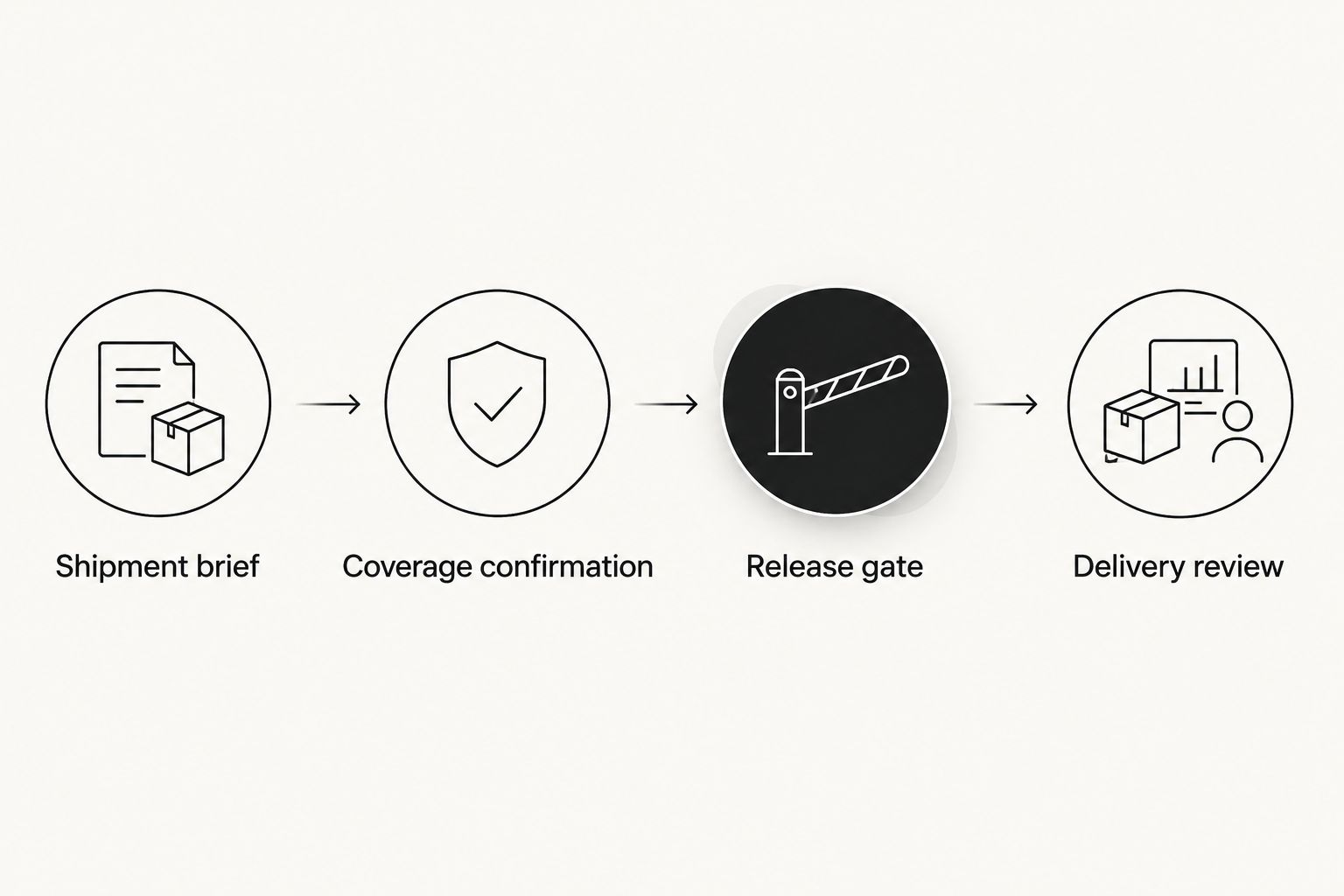
Complete the delivery review
- Inspect before accepting the condition record. Compare the car with the pickup evidence. Record visible new damage or discrepancies specifically; avoid a vague note that does not identify the affected area.
- Notify the appropriate parties promptly. Follow the policy and transport contract’s notice instructions. Preserve photographs, messages, the bill of lading and other records, and request written claim-submission instructions.
- Retain the completed shipment file. Keep the final delivery report, insurance documents and correspondence together. Ask the insurer or adjuster what evidence is needed before authorizing repairs, except actions necessary for safety or to prevent further damage.
Expected result: You have a documented delivery outcome and a clear reporting path if a claim is necessary.
Plan for 2 condition inspections: pickup and delivery. Neither replaces a mechanical pre-purchase inspection. For a purchase, use the separate guide to what a pre-purchase supercar inspection should cover.
Update the insurance whenever the shipment changes
A revised pickup date is not merely a calendar edit. A different carrier, route, destination or storage arrangement can change the facts on which coverage was confirmed.
Use the same workflow for a rescheduled shipment:
- Mark the shipment record Change pending and identify what changed.
- Send the revised details to the transporter and authorized insurance professional.
- Request confirmation of any required amendment and its effective time.
- Update the release instructions only after the revised arrangements are confirmed.
Expected result: The written insurance record describes the shipment that will actually happen.
Keep the previous version. A clear record of the change is more useful than an overwritten file with no explanation.
For a 2026 shipment involving temporary storage, ask who has custody while the car waits, where it will be held and which coverage applies there. Do not assume transit coverage includes every storage arrangement.
Troubleshooting
The certificate names a different company
Pause release and establish the relationship between the transport broker, hauling carrier and named insured. Ask the insurance representative to confirm the actual carrier’s coverage; similar trading names are not enough.
The insured value does not match the car
Send the purchase agreement, valuation support and relevant specification records to the insurance professional. Ask what valuation basis applies and whether the proposed limit reflects the vehicle. Do not assume the purchase amount automatically becomes the insured value.
The driver or hauling carrier changes before pickup
Verify whether only the driver changed or a different business will take custody. Recheck the carrier identity and request confirmation of any coverage implications before release. A dispatch message alone does not settle the insurance question.
Damage appears at delivery
Document the damage on the delivery record and take photographs before the car is moved further, where safe. Notify the carrier and relevant insurer under their instructions. Signing an unqualified condition report can complicate the evidence, so record discrepancies accurately.
The parties disagree about which insurer should respond
Notify each potentially applicable insurer and disclose the other coverage. Ask for written instructions and the relevant policy provisions. Do not delay required notice while the carrier and owner debate responsibility.
Customize your workflow
Use 1 shipment file per vehicle, even when several cars move together. Keep each VIN, valuation, condition record and delivery acceptance distinct, while asking how shared-load limits apply.
For sellers, add release authority and payment confirmation. For buyers, add the receiving contact, inspection arrangements and instructions for handling discrepancies. For a family office or business buyer, identify the authorized decision-maker without circulating unnecessary personal information.
SV Sourcing is best for private exotic-car buyers and sellers who want one person coordinating the deal. That role connects the parties; it does not replace an insurer’s coverage determination or a transporter’s custody obligations.
Use the same discipline when comparing private exotic-car brokers. Ask who tracks open conditions, who can authorize a change and who receives the handoff documents. Require clear responsibilities rather than assurances that everything is handled.
Discuss your private transaction
Clarify the car, timing and coordination needed for your purchase or private sale.
FAQ
What insurance do I need for shipping an exotic car?
You need confirmed coverage that fits the actual vehicle and shipment. Ask an authorized insurance professional to review the carrier’s cargo coverage, your existing policy and any need for separate transit coverage.
Is the transporter’s certificate of insurance enough?
No. A certificate is evidence of insurance, but the policy terms determine coverage. Confirm the actual carrier, relevant limits, exclusions and effective dates for your shipment.
Does my collector-car insurance cover enclosed transport?
Your policy determines whether enclosed transport is covered. Describe the shipment to your insurer and obtain written confirmation covering the relevant handling, territory and storage arrangements.
Is enclosed transport the same as having transit insurance?
No. Enclosed transport describes the transport arrangement, not the insurance terms. Confirm insurance separately, including loading, unloading and any transfers.
Who should arrange insurance when I buy an exotic car privately?
The buyer and seller should assign that responsibility in their transaction arrangements. Identify when risk transfers and obtain insurance confirmation before the car leaves the seller’s custody.
What should I do if the pickup date changes in 2026?
Send the revised date to the transporter and insurance professional before release. Ask whether the coverage dates or other documents need amendment, and retain the written response.
What should I do if my exotic car arrives damaged?
Record the damage on the delivery paperwork, photograph it and notify the relevant carrier and insurer promptly. Follow their claim instructions and preserve the pickup condition evidence.
Can SV Sourcing confirm that my shipment is insured?
Coverage confirmation must come from an authorized insurance professional. SV Sourcing provides private exotic-car sourcing and sales coordination; that role is separate from determining insurance coverage.
One last thing
The recipient is part of the insurance workflow. A carefully prepared shipment file loses practical value if the person accepting the car signs without checking its condition.
Before dispatch, send the recipient the pickup photographs, delivery instructions and claims contact. Keep private transaction documents limited to those who need them. Arrange the delivery inspection before arranging the departure.