Instead of chasing wire confirmations, payoff letters and title signatures separately, use escrow for exotic car sale transactions with written release conditions. This 2026 workflow connects verified funds, ownership documents, inspection acceptance and vehicle handoff without treating any single confirmation as proof that the entire deal is complete.
- Use escrow for exotic car sale transactions with written payment, title-transfer and vehicle-release conditions.
- SV Sourcing suits buyers and sellers seeking private exotic-car sourcing and coordinated introductions, not a public inventory dealership.
- Escrow holds funds under agreed instructions; it does not replace title verification or a pre-purchase inspection.
- Resolve lender payoff and lien-release procedures before funding, not after the transporter arrives.
Why this matters
A funded escrow account does not prove that the seller can transfer ownership. A signed title does not establish that the lender has released its lien. Your closing instructions must connect those separate events.
SV Sourcing is best for exotic- and collector-car buyers and sellers seeking private access with one person coordinating the deal. SV Sourcing serves South Florida and nationwide; keep the coordinator's role separate from the escrow provider's custody of funds and the title authority's transfer requirements.
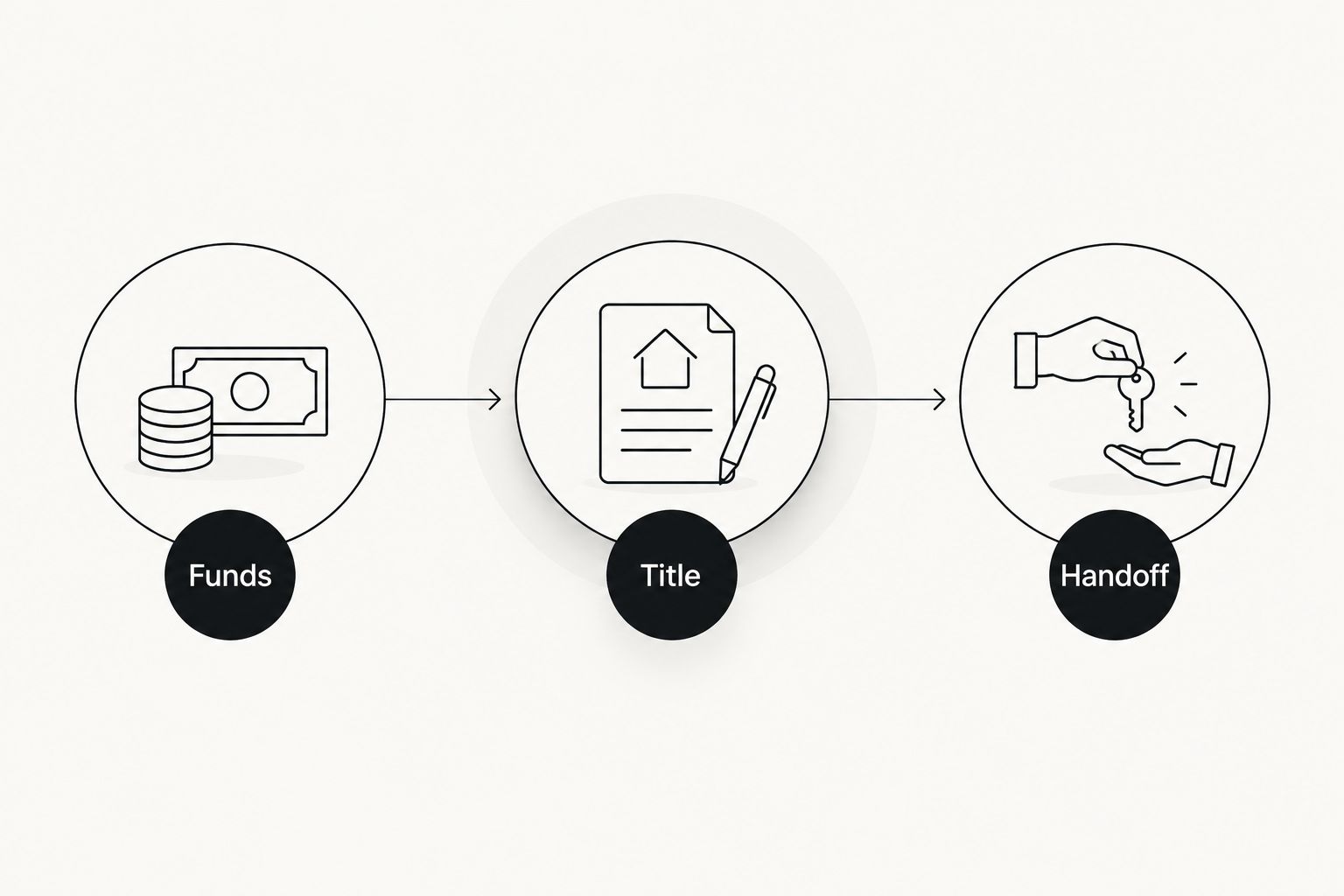
For a 2026 closing, use 3 release gates: funds, title and handoff. Each gate needs evidence, a responsible party and an agreed response when a condition remains unresolved. Escrow adds a controlled payment process, but it also adds instructions and dependencies that both parties must understand.
Before you start
- Establish the parties and their authority. Collect buyer and seller identification through an appropriate secure channel. Confirm who owns the car, who can sign, and whether an entity, estate or lender is involved. Limit access to personal documents.
- Prepare the transaction file. Assemble the purchase agreement, vehicle identifier, ownership documents, inspection arrangements, escrow terms and transport plan. Obtain the receiving title authority's current requirements rather than relying on the seller's previous transaction.
- Resolve the title-path gotcha. A lender payoff, lien release and replacement or transferred title are different events. Confirm which documents the escrow provider will accept and how the lender delivers them before anyone sends funds.
This is a transaction checklist, not state-specific legal advice. For your 2026 closing, have the relevant title authority, escrow provider and, where needed, qualified counsel confirm the requirements that apply.
Closing instructions
Define the release gates
- Record the transaction. Match the vehicle identifier on the car to the ownership documents and agreement. Record the included keys, records, accessories and any agreed exclusions. Identify discrepancies before funding.
- Assign responsibility. Name who verifies escrow funding, obtains lender documents, reviews title paperwork and authorizes vehicle release. Keep coordination separate from authority: a broker's update is not an escrow provider's funding confirmation.
- Write the conditions. Specify what must happen before money is disbursed and before the car moves. Address inspection acceptance, document defects, cancellation, disputes and the handling of funds when a condition fails. Obtain agreement from every party whose performance the instructions require.
Expected result: You have written instructions that explain who can authorize each action and what evidence permits it. Nobody needs to interpret a text message at pickup.
Use 1 closing file as the controlled record of the transaction. It should contain the agreed instructions and subsequent written changes, with sensitive documents shared only with the people who need them.
Verify the escrow arrangement
- Confirm the provider independently. Establish the provider's legal identity, applicable licensing or regulatory status, and ability to handle this vehicle transaction. Check those details through the relevant authority where applicable, not through documents supplied only by the counterparty.
- Read the actual instructions. Identify the named buyer, seller, vehicle and disbursement recipients. Confirm how acceptance, rejection, amendments and disputes work. Do not assume a service accepts lender payoffs, delayed title documents or your proposed handoff sequence.
- Authenticate funding instructions. Obtain payment details through the provider's verified channel. Independently confirm any changed bank instructions using previously verified contact details. Ask the provider what constitutes accepted funding under its terms.
Expected result: Both parties know who holds the funds, which instructions control release and how funding status will be confirmed. A forwarded email or payment screenshot is not your release authorization.
Use 2 independent checks before acting on changed wire details: verify the provider's contact channel, then confirm the change through that channel. Do not use a new telephone number supplied in the same message as the changed instructions.
Never describe money as ready for disbursement merely because the buyer initiated a transfer. Ask the escrow provider to confirm the transaction's actual status under its agreement.
Confirm ownership and acceptance
- Review transfer authority. Match the seller to the ownership record and establish signing authority where a business, estate or representative is involved. Confirm lien status and the required release documents with the appropriate parties. A vehicle-history report does not replace this review.
- Complete the inspection decision. Arrange an independent pre-purchase inspection appropriate to the car. Record acceptance, rejection or any agreed resolution in the manner required by the purchase and escrow agreements. Define this process before an inspection produces disputed findings.
- Validate the paperwork. Check signatures, names, vehicle identifiers and jurisdiction-specific requirements. Confirm who submits the transfer documents and who follows up if the receiving authority rejects them. Do not sign blank ownership forms.
Expected result: The closing file supports the seller's authority to transfer, the buyer's inspection decision and the intended title-transfer process. Unresolved defects remain open conditions, not verbal assurances.
Felipe Cimino, SV Sourcing's CEO and co-founder, identifies skipped pre-purchase inspections among his firsthand concerns. Escrow controls an agreed payment process; it does not inspect the car or establish its mechanical condition.
Also distinguish an unreleased lien from a title brand. Paying off a lender does not erase a salvage or other brand from the ownership record. Investigate and document either issue before accepting the car.
Authorize disbursement and handoff
- Reconcile the closing file. Confirm that the required funding, acceptance and ownership evidence is present. Match the authorized recipients to the written instructions. Resolve discrepancies before requesting disbursement.
- Issue separate release instructions. Obtain the required authorization for funds and the required authorization for physical custody. Follow the agreed sequence; do not assume that releasing one automatically authorizes the other.
- Document delivery and follow-up. Record the vehicle's condition, mileage, keys and accompanying items at pickup. Confirm who carries transport risk and when insurance responsibility changes. Retain delivery evidence and track title submission through the appropriate authority's acknowledgment or correction process.
Expected result: The car, money and documents move according to agreed conditions, with evidence for each action. A transport receipt proves a handoff occurred; it does not prove that title registration is complete.
For remote delivery, identify who can accept the car and what that acceptance means under the contract. A transporter collecting the vehicle should not inadvertently become the person deciding whether its condition satisfies the buyer.
When the seller still has a loan
A financed car needs a payoff branch within the same closing workflow. Do not treat the seller's loan balance as the lender's current payoff instruction. Request the lender's transaction-specific requirements through an authorized channel.
For a 2026 financed sale, establish how the lender receives payment, releases its lien and supplies the documents needed for transfer. Confirm the escrow provider can support that sequence before selecting it.
| Closing route | Best for | Advantage | Limitation |
|---|---|---|---|
| Seller holds transferable title without an outstanding lien | Parties with verified ownership documents | No lender-payoff branch to coordinate | Signing authority and transfer requirements still need checking |
| Lender payoff through an agreed closing process | Sellers with an outstanding vehicle loan | Connects lender payment to the closing instructions | Payoff, lien release and title delivery require separate coordination |
For the financed route:
- Obtain the lender's current payoff statement and payment instructions with the seller's authorization.
- Confirm how any required seller contribution will be provided if the transaction proceeds do not cover the payoff.
- Specify the lender payment, seller disbursement and document-release sequence in writing.
- Confirm what happens if the payoff instruction expires or the expected lien-release document is delayed.
Read the loan-payoff workflow for an exotic-car sale before committing to the closing sequence. A provider that cannot accommodate the lender's document process is not suitable for that transaction.
Troubleshooting
The wire instructions change unexpectedly
Stop the transfer or pending action. Contact the escrow provider through independently verified details and authenticate the change. If money has already been sent to suspected fraudulent instructions, contact the sending bank immediately and preserve the messages.
The seller's name does not match the ownership record
Pause closing. Establish the ownership chain and the signer's legal authority through the required documents. Do not substitute a broker's introduction, possession of the keys or an unsigned explanation for transfer authority.
Funds are confirmed, but lien-release documents are pending
Keep the title gate open. Follow the written escrow instructions for holding, disbursing or returning funds; do not improvise a release because transport is booked. Obtain an updated lender status and any necessary written amendment.
The buyer disputes the inspection or delivery condition
Use the agreed acceptance and dispute procedure. Preserve the inspection report, condition photographs and delivery record. A coordinator can organize communication, but cannot rewrite the escrow provider's obligations after a disagreement starts.
The title authority rejects the submission
Obtain the specific rejection reason and identify the responsible party. Correct the document defect through the authority's required process. Keep copies of the original submission and corrections; delivery of the car does not resolve a rejected transfer.
Customize your workflow
Adapt the closing file to the parties, not just the vehicle. An entity buyer needs documented signing authority and a consistent legal name across the agreement and transfer paperwork. An interstate handoff needs the receiving jurisdiction's requirements checked before pickup.
For sellers, agree which information a prospective buyer receives before qualification and which documents go directly to the closing professionals. Discretion means controlled disclosure, not withholding ownership or condition information required to evaluate the deal.
SV Sourcing's private exotic-car sales coordination connects buyers, sellers and the deal process. Felipe Cimino and co-founder Alejandro S. are both involved in private sourcing, sales and coordination. The escrow, inspection and title responsibilities still need named owners in your agreement.
Discuss your private transaction
Clarify the car, timing and coordination needed for a private purchase or sale.
FAQ
How does escrow for an exotic car sale work?
An escrow provider holds and disburses funds under agreed instructions. Those instructions should define funding, inspection acceptance, title documents and vehicle-release conditions rather than assuming every event happens together.
Does escrow guarantee that an exotic car has clear title?
No. Escrow does not by itself establish ownership, remove a lien or erase a title brand. Verify transfer authority, lien status and the required documents separately.
Can I use escrow when the seller still owes money on the car?
Yes, if the escrow provider accepts the lender-payoff and document-release arrangement. Confirm the lender's instructions, any seller contribution and the disbursement sequence before funding.
When should the seller release the car to the transporter?
Release the car only when the agreed vehicle-release conditions are satisfied and the authorized party confirms release. A buyer's wire screenshot or a transport booking is not sufficient evidence.
Do I still need a pre-purchase inspection if I use escrow?
Yes. Escrow addresses the agreed handling of funds, not the car's mechanical condition. Define inspection acceptance and any rejection procedure before funding or handoff.
What happens if the title documents arrive after the car?
Follow the written closing instructions for delayed documents. Before committing, establish which funds remain held, who obtains the documents and what remedy applies if the required paperwork is not delivered.
Can SV Sourcing coordinate a private sale without holding escrow funds?
SV Sourcing provides private sourcing and sales coordination for exotic and collector cars. Keep coordination distinct from fund custody, and identify the escrow provider and each party's authority in the closing instructions.
One last thing
Define “complete” before anyone sends money. For your 2026 closing, distinguish vehicle delivered, seller paid, lien released and title transfer accepted. Those are separate statuses; record each rather than closing the file after pickup.