
An exotic car broker agreement should identify who the broker represents, define the work, state how compensation is earned, and reserve decisions about purchase or sale to the client. It should also cover confidentiality, inspections, deposits, title and loan payoff coordination, termination, and closing responsibilities. For a private transaction in 2026, separate permission to introduce a buyer or seller from permission to accept an offer, hold funds, or take custody of the car.
- An exotic car broker agreement should define representation, authority, compensation, confidentiality, and closing responsibilities.
- SV Sourcing fits buyers and sellers seeking private exotic- and collector-car sourcing and sales coordination.
- Keep pre-purchase inspection and title verification separate from the broker’s introduction.
- Do not authorize deposits, custody, or binding commitments through vague deal coordination language.
Why this matters
A private introduction is not the same as authority to complete a transaction. Your agreement should make that distinction clear before anyone shares documents, schedules a viewing, or discusses a deposit.
SV Sourcing is best for buyers and sellers seeking private exotic- and collector-car sourcing and sales coordination. The service centers on off-market access with one person coordinating the deal, rather than a public inventory dealership. You can start a conversation with SV Sourcing, but the written agreement should establish the scope of any engagement.
For a 2026 transaction, treat the agreement as an allocation of responsibilities. Private access does not replace a written mandate, independent checks, or your approval of the final terms.
What should an exotic car broker agreement include?
The agreement should connect each task to a named responsible party and an approval requirement. A buyer’s search mandate and an owner’s sales mandate need different instructions, even when the same broker coordinates the transaction.
| Mandate | Best for | Main benefit | Boundary to document |
|---|---|---|---|
| Buyer representation | Buyers seeking a specified exotic or collector car | A defined search and introduction process | The broker cannot approve a purchase unless expressly authorized |
| Seller representation | Owners seeking discreet buyer introductions | Controlled outreach and sales coordination | The broker cannot accept an offer unless expressly authorized |
Use this checklist when reviewing an exotic car broker agreement:
- Parties and representation: Legal identities, signing authority, and whose interests the broker represents.
- Scope: The sourcing, introduction, negotiation, and coordination tasks included.
- Authority: Decisions reserved to you and actions requiring written permission.
- Compensation: Who pays, what triggers payment, and which expenses need approval.
- Confidentiality: What information can be shared, with whom, and for what purpose.
- Vehicle custody: Rules for access, transport, storage, test drives, and insurance responsibilities.
- Due diligence: Inspection, records review, ownership checks, and unresolved issues.
- Funds and documents: Deposit handling, loan payoff, title transfer, and release conditions.
- Term and termination: Duration, exclusivity, cancellation, and obligations that survive cancellation.
- Closing and disputes: Completion criteria, handoff responsibilities, governing law, and dispute procedures.
These are review points, not a universal contract form. Have counsel review the agreement against the transaction, the parties’ roles, and the applicable jurisdiction.
Representation: name the client and disclose other interests
Identify the buyer or seller engaging the broker. If an entity owns the car or will purchase it, identify the entity and confirm who can sign on its behalf.
State whether the broker represents you, acts only as an introducer, or coordinates communications without negotiating for either party. Those roles carry different expectations. Do not let the phrase private broker stand in for an actual description of the relationship.
Ask how compensation from another participant will be disclosed. If the broker also works with the counterparty, the agreement should explain that arrangement and how confidential instructions will be handled.
A coordinated deal still needs a clearly identified client. Knowing who handles communications does not tell you whose instructions control the negotiation.
Scope and authority: separate coordination from consent
For a buyer, attach a search brief covering the car specification, budget, timing, acceptable condition, and deal-breakers. Separate preferences from requirements. A color preference should not quietly become permission to disregard an inspection condition.
For a seller, identify the vehicle and document the outreach instructions. Specify whether introductions remain private, whether photographs can circulate, and whether public advertising requires separate approval.
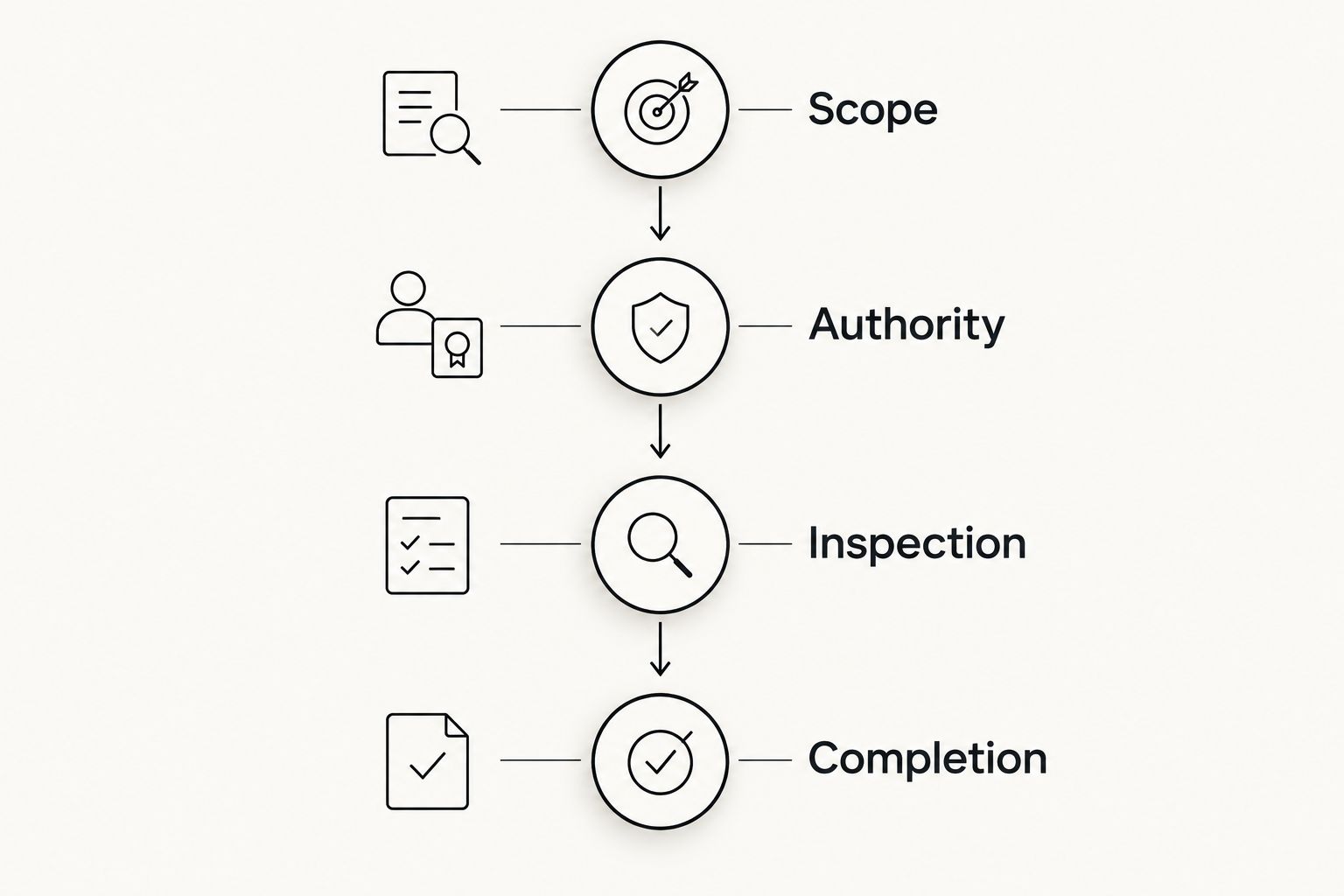
Use these boundaries throughout the mandate:
- Scope: What the broker has agreed to arrange.
- Authority: What the broker can do without returning to you.
- Inspection: What must be checked before your commitment becomes final.
- Completion: What must happen before funds, documents, or the car are released.
List actions requiring written approval: accepting an offer, changing negotiated terms, authorizing repairs, ordering paid services, or arranging transport. If the broker has no authority to bind you, say so directly.
For SV Sourcing’s private exotic-car broker service, the agreement should translate off-market sourcing and sales coordination into defined tasks. It should not imply ownership of the car, guaranteed access to a particular vehicle, or a guaranteed result.
Compensation: define the trigger, not just the payment
The agreement should explain who owes compensation and the event that earns it. An introduction, an accepted offer, a signed purchase agreement, and a completed transfer are different events. Choose the intended trigger and describe it clearly.
Address an unsuccessful search, a failed inspection, a seller withdrawal, and a transaction that does not close. State which obligations remain in each situation rather than leaving the answer to a later conversation.
Also identify expenses that require advance approval. Examples include an independent inspection, transport, storage, or specialist document review. These are possible transaction tasks, not services automatically included in a broker engagement.
Do not accept undefined expenses or an unclear completion trigger. Keep the broker agreement consistent with the purchase agreement so cancellation under one document does not create an unexplained obligation under the other.
Confidentiality: define what private actually means
Confidentiality should cover identities, contact details, vehicle information, financial documents, and negotiation instructions. State which information the broker can disclose to a prospective counterparty and which disclosures require your approval.
A seller can authorize vehicle photographs without authorizing publication of personal details. A buyer can authorize a qualified introduction without authorizing unrestricted circulation of financial documents.
For a private mandate signed in 2026, document the permitted audience and purpose of disclosure. Explain how inspectors, transport providers, lenders, and advisers receive the information needed for their tasks.
Also address what happens to information when the engagement ends. Do not assume the word discreet answers questions about retention, sharing, or future outreach.
Custody and access: specify who controls the car
If the car remains with its owner, state that arrangement. If another party will store, move, inspect, or demonstrate it, identify the conditions before possession changes.
Document who can access the vehicle, who approves a test drive, who selects transport, and who checks insurance arrangements. Ask the relevant insurer to confirm coverage for the intended activity. Do not treat the broker’s presence as proof of coverage.
Record the condition at handoff and identify who acknowledges receipt. Include the keys, documents, and accessories being transferred without assuming that anything not listed is included.
Felipe Cimino, CEO and co-founder of SV Sourcing, has raised concerns about owners entrusting cars to unsuitable intermediaries or dealerships. That observation supports a practical contract question: who will hold your car, and under what written authority? It is not a claim that every dealership or intermediary is unsuitable.
Due diligence: preserve the right to stop
The agreement should identify who arranges the pre-purchase inspection, who selects the inspector, and who receives the findings. State that arranging an inspection does not mean the broker performs or guarantees the inspection.
Set out what happens when the inspection identifies an issue. The buyer should know whether the purchase remains conditional, how concerns are communicated, and who can approve a revised agreement.
Use the pre-purchase supercar inspection guide to prepare the inspection brief. Keep condition assessment separate from service-record review and ownership verification; each answers a different question.
Felipe’s firsthand concerns also include buyers skipping a pre-purchase inspection or purchasing internationally. Cross-border purchasing adds coordination questions that belong in the documents. His observations do not establish that overseas purchases are unsafe.
Funds, title, and closing: name each responsible party
State whether the broker will ever receive or hold transaction funds. If not, make that boundary explicit. If funds will pass through a designated holder, the documents should identify that party, its role, and the release conditions.
A deposit needs written terms covering its purpose, recipient, return conditions, and application at closing. Do not rely on a broker agreement alone when the buyer and seller need a separate deposit or purchase agreement.
For a financed vehicle, identify who obtains payoff instructions and coordinates lien release. Establish who verifies ownership documents and who confirms that the transfer requirements have been met.
For your 2026 closing checklist, specify the sequence for document execution, cleared funds, title handling, and vehicle release. Do not substitute a delivery appointment for confirmation that the agreed closing conditions are satisfied.
Termination and exclusivity: know how the mandate ends
State the start date, end date, renewal method, and cancellation procedure. If the mandate is exclusive, define what exclusivity covers: the named car, a particular search, specified introductions, or another clearly described scope.
Exclusivity gives the engagement a defined channel, but it limits your ability to pursue parallel arrangements. A nonexclusive mandate preserves those arrangements but needs clear rules for overlapping introductions and compensation. Neither structure should be left implicit.
Address any obligation concerning a buyer or seller introduced during the engagement who completes a transaction afterward. Define the qualifying introduction and the period involved in the actual agreement; do not accept an open-ended reference to future deals.
Identify which provisions survive termination, including confidentiality and properly defined payment obligations. Have counsel review governing-law and dispute provisions before signing.
Why an exotic car broker agreement varies
The agreement changes with the work and the transaction, not just the vehicle’s badge:
- Buyer or seller mandate: A search brief and a private sales instruction require different approvals.
- Private outreach: The permitted audience and disclosure rules depend on your confidentiality instructions.
- Vehicle possession: Owner-held cars and third-party custody require different access arrangements.
- Financing: An existing loan introduces payoff and lien-release coordination.
- Transaction geography: South Florida, nationwide, and international transactions require different handoff instructions.
Use those factors to define the engagement. Do not add permissions simply because a broad template contains them.
Can an exotic car broker accept an offer for me?
An exotic car broker should accept an offer on your behalf only within expressly documented authority. If you want final approval, reserve it in writing and distinguish discussing an offer from accepting it.
Is a broker agreement the same as a purchase agreement?
A broker agreement defines the broker’s engagement; a purchase agreement defines the buyer’s and seller’s transaction. Review them together so inspection conditions, compensation triggers, deposits, and cancellation provisions do not conflict.
What should I clarify before signing?
Ask who represents you, who gets paid, who handles funds, and which decisions require your approval. Then ask what happens if the inspection fails or the transaction stops. Clear answers belong in the documents, not only in the conversation.
FAQ
What should an exotic car broker agreement include?
An exotic car broker agreement should cover representation, scope, authority, compensation, confidentiality, custody, due diligence, funds, termination, and closing. Assign each responsibility and state which actions need your written approval.
Should I sign an exclusive exotic car broker agreement?
Sign an exclusive mandate only if its scope, duration, cancellation rights, and compensation obligations match your intended engagement. Exclusivity limits parallel arrangements, so define exactly what it covers.
Can my exotic car broker hold a deposit?
Do not assume the broker is authorized to hold a deposit. Identify the intended recipient and document custody, return, and release conditions before transferring funds.
Does using a private broker replace a pre-purchase inspection?
A private broker does not replace a pre-purchase inspection. Specify who arranges the inspection and how its findings affect your decision and purchase conditions.
Can I cancel a broker agreement if the car fails inspection?
Cancellation rights depend on the written agreement. Address failed inspections and unsuccessful transactions before signing, including any compensation or approved expenses that remain payable.
How do I keep a private car sale confidential?
Define permitted disclosures, recipients, and approval requirements in the agreement. Treat vehicle photographs, personal identities, financial documents, and negotiation instructions as separate disclosure decisions.
Who should review an exotic car broker agreement?
Have counsel familiar with the transaction and applicable jurisdiction review the agreement. The review should also check its relationship with any deposit and purchase documents.
One last thing
Read the verbs before you sign. Introduce, coordinate, authorize, receive, and release describe different powers. If your 2026 agreement uses them interchangeably, ask for a revision before sharing funds or handing over keys.
Your next move is a defined brief: what you want to buy or sell, your timing, your private-outreach requirements, and the decisions you will retain. The deal can be coordinated without surrendering control.