
An exotic car broker represents the buyer, the seller, or neither party as an advocate, depending on the agreed role and the transaction structure. Before sharing confidential information or authorizing negotiations, confirm in writing who the broker works for, who pays the broker, and which decisions remain yours; coordinating a private deal does not itself establish representation.
- An exotic car broker's agreed role determines representation, not who introduced the car.
- Buyer representation, seller representation, and deal coordination serve different purposes; confirm the scope before negotiating.
- SV Sourcing provides private exotic-car sourcing and sales coordination; clarify representation for your particular transaction.
- Off-market access does not replace vehicle-history checks, an independent inspection, or clear payment and title arrangements.
Who does an exotic car broker represent in a private deal?
The role must be explicit. A broker who finds a car is not automatically your buyer representative. A broker who introduces a purchaser is not automatically the seller's advocate. Use the agreed scope to distinguish access, negotiation, and coordination.
SV Sourcing provides private, off-market sourcing and sales coordination for exotic and collector cars in South Florida and nationwide. For any private transaction in 2026, ask how representation applies to that specific engagement before you authorize action.
| Role | Best for | Main purpose | Limitation to clarify |
|---|---|---|---|
| Buyer representative | Buyers seeking help pursuing a defined car | Work toward the buyer's agreed search and negotiation objectives | Authority to negotiate, communicate an offer, or commit the buyer must be clear |
| Seller representative | Owners seeking a private sale | Work toward the seller's agreed sale objectives and buyer introductions | Disclosure permissions, offer handling, and authority to accept terms must be clear |
| Deal coordinator | Parties needing an organized transaction process | Coordinate introductions, information, and agreed next steps | Coordination does not itself mean advocacy for either side |
These are 3 roles, not interchangeable labels. A transaction can include more than one function, but do not assume that a change in tasks changes whom the broker represents. Resolve overlapping responsibilities before the overlap becomes a disagreement.
Why this matters
A private exotic-car deal involves information you would not necessarily share with the other party. Your maximum purchase budget, minimum acceptable sale terms, and reasons for moving quickly can affect negotiation. Decide what stays confidential before those details enter the conversation.
For a 2026 purchase or sale, discretion should cover both the car's exposure and the handling of your instructions. A quiet introduction is useful. Clear authority matters just as much.
Representation answers whose objectives guide the work. Coordination answers who keeps the process organized. You need to understand both before treating the broker's recommendation as advice given solely on your behalf.
Buyer representative: define the search and negotiating authority
Buyer representation starts with your brief. Describe the car specification, acceptable condition, documentation expectations, budget, and timing. Separate requirements from preferences so that a promising introduction does not quietly become permission to compromise.
The advantage is a defined buyer-side objective. The limitation is that representation alone does not establish the car's condition, prove its history, or complete your due diligence.
Before the search moves into negotiation, specify the broker's authority:
- Search scope: Identify acceptable specifications and the differences you want brought back for approval.
- Offer authority: State whether the broker can discuss terms, transmit an offer, or only request information.
- Confidentiality: Identify financial and personal details that must not reach the seller without permission.
- Inspection conditions: Establish which checks must be completed before you make a binding commitment.
- Decision ownership: Keep acceptance of the car and final terms with the person expressly authorized to decide.
Do not confuse a budget with an instruction to offer that amount. Your search ceiling and your negotiating position serve different purposes. Tell the broker how each should be handled.
A buyer also needs to know whether the broker has an existing seller-side relationship. Ask directly about that relationship and any compensation connected to the introduction. Get the answer before relying on a recommendation about the seller's terms.
Seller representative: control introductions and disclosures
Seller representation should begin with the owner's instructions. Define how the car can be presented, what information can be shared, and which prospective buyers merit a direct introduction. Agree on who communicates offers and who can respond on your behalf.
The advantage is a sale process organized around your objectives. The limitation is that private exposure does not guarantee an acceptable offer or a completed transaction.
Discretion requires practical boundaries, not just a promise to keep the sale private. Specify whether photographs, identifying details, service documents, and ownership information can be circulated. Treat permission to show a car separately from permission to identify its owner.
Also distinguish an asking position from an acceptance instruction. A broker needs to understand your sale objectives without interpreting every discussion as authority to agree. Written approval checkpoints protect that distinction.
Felipe Cimino, CEO and co-founder of SV Sourcing, previously sold supercars at a dealership. His firsthand concerns include owners entrusting cars to unsuitable intermediaries or dealerships and unrealistic asking prices leaving cars unsold. Those observations support checking the intermediary's role and discussing asking expectations; they do not establish that every dealership or private intermediary is unsuitable.
For sellers planning a transaction in 2026, the practical question is straightforward: who has permission to do what with your car, your information, and your terms?
Deal coordinator: organize the process without assumed advocacy
A deal coordinator helps organize the agreed transaction steps. That can mean keeping introductions, document requests, inspections, and communications aligned with the parties' instructions. The actual scope must still be stated.
The advantage is clearer responsibility for the process. The limitation is that an organized process does not tell you whether the coordinator is negotiating for you.
Ask which tasks are administrative and which involve judgment on your behalf. Scheduling an inspection differs from advising you to accept its findings. Passing along an offer differs from recommending acceptance.
If the same person coordinates communication with buyer and seller, define how private instructions are handled. Ask what happens when the parties disagree and which decisions require separate approval. Do not assume that access to both sides means permission to share everything between them.
SV Sourcing is best for exotic- and collector-car buyers and sellers seeking private off-market access and deal coordination rather than public-inventory browsing. That service description does not establish a particular representation arrangement; clarify the role for your deal.
Why an exotic car broker's role varies
The car alone does not determine representation. The engagement and transaction structure determine what you should clarify before proceeding.
- Who engaged the broker: Establish whether the assignment began with a buyer's search, an owner's sale, or an introduction between parties.
- What work was agreed: Separate sourcing, marketing permission, negotiation support, and transaction coordination.
- Who provides compensation: Ask who pays, when an obligation arises, and whether another party also provides compensation.
- What relationships already exist: Disclose relevant buyer-side and seller-side connections before relying on advice.
- What authority was granted: Define permissions to share information, communicate terms, arrange access, and seek approval.
Payment is a necessary disclosure, but it is not a substitute for a clear description of representation. Likewise, an introduction does not answer whose interests guide negotiation. Ask about both relationships and responsibilities.
If a legal question arises about agency duties, conflicts, or the effect of an agreement, have qualified counsel review it. Do not infer legal obligations from a broker's job title or a description of the service.
How do I confirm representation before the deal starts?
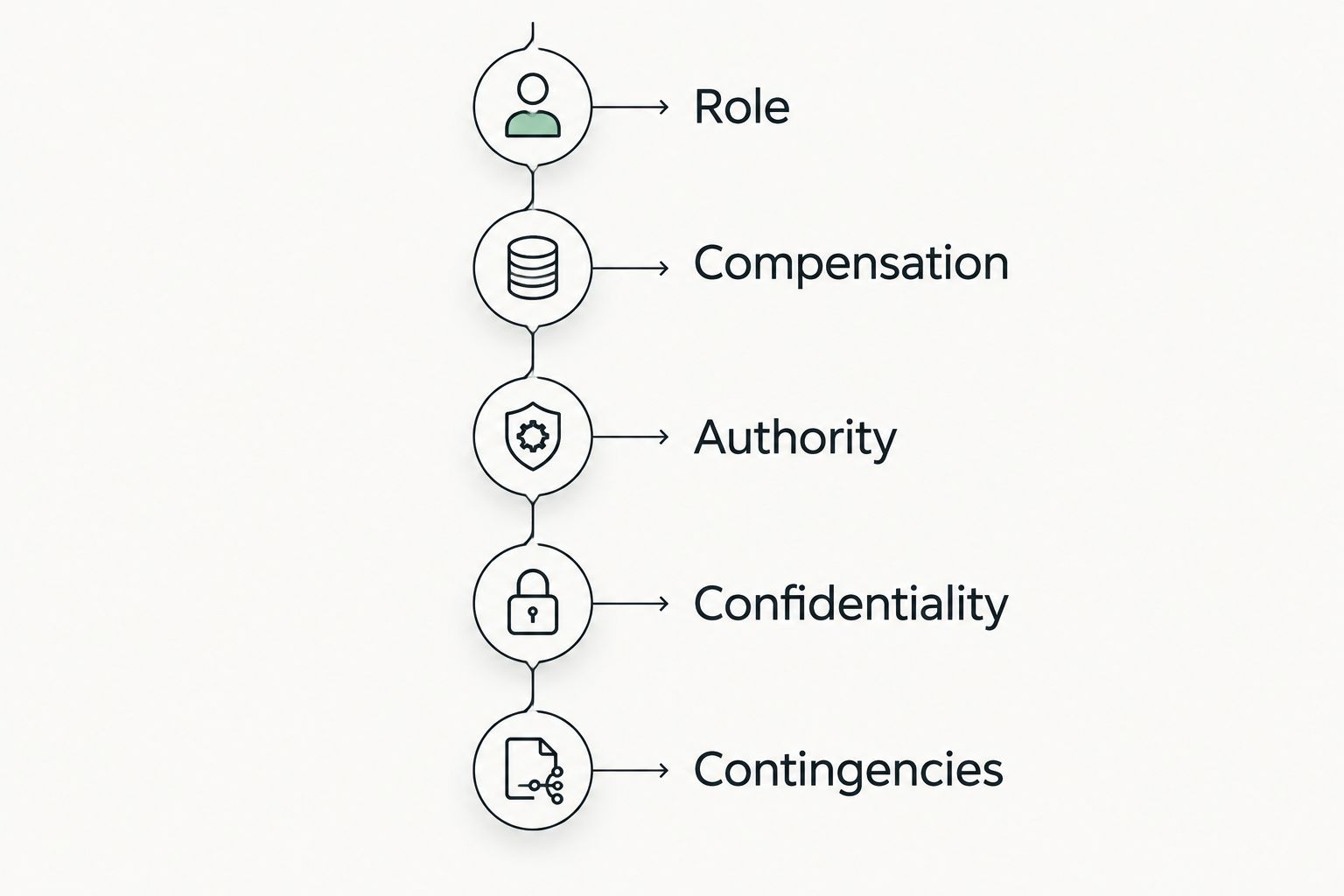
Use 5 checkpoints before the broker begins acting on sensitive instructions. Apply the same discipline to a 2026 search brief, a seller introduction, or a transaction already under discussion.
- Role: Ask whom the broker represents in this transaction and whether that role changes at any stage. Record the answer alongside the scope of work.
- Compensation: Ask who provides compensation and what triggers the obligation. Identify any payment or incentive connected to the other party.
- Authority: State which actions require your approval. Distinguish discussing terms from communicating an authorized offer or acceptance.
- Confidentiality: Identify information that stays private and information that can be shared. Specify who approves disclosure to another party.
- Contingencies: Record the unresolved matters that must be addressed before commitment or completion. Include inspection, documentation, title, payoff, and payment arrangements where relevant.
These checkpoints are a conversation framework, not a replacement for the agreement. The purpose is to expose assumptions before anyone acts on them. If an answer changes, update the instructions rather than relying on an earlier understanding.
Keep the written record usable. A brief email confirming authority and open questions is easier to consult during negotiations than a conversation everyone remembers differently. Ask for clarification whenever a task falls outside the agreed scope.
Does the person paying the broker determine representation?
The 3 roles remain distinct regardless of who provides payment. Do not use the payment arrangement alone to infer whom the broker represents; confirm the agreed role, responsibilities, and relevant relationships together.
Ask whether compensation comes from the buyer, the seller, or another source. Then ask how that arrangement relates to the broker's advice and instructions. Resolve any legal uncertainty through review of the actual agreement.
Can one broker work with both buyer and seller?
The 3 roles can involve communication with both parties, but communication is not the same as representing both. Ask whether the broker is advocating for one side, coordinating the deal, or proposing another arrangement that requires explicit agreement.
Before accepting an overlapping role, clarify confidentiality, conflicting instructions, compensation, and approval rights. Seek legal review where the arrangement raises questions about representation duties or consent.
Does buyer representation replace a pre-purchase inspection?
The 5 checkpoints include contingencies because representation does not replace vehicle due diligence. Keep inspection decisions separate from the introduction and negotiation process.
Felipe's firsthand concerns also include buyers purchasing internationally or skipping a pre-purchase inspection. These are observations, not a claim that every overseas purchase is unsafe. For a 2026 purchase, arrange an independent inspection appropriate to the car and review the history of a supercar for sale before treating access as evidence of quality.
An inspection and a document review answer different questions. The inspection examines condition; the documents support checks of the car's history and transaction details. Neither should be treated as permission to ignore the other.
FAQ
Who does an exotic car broker work for in a private sale?
An exotic car broker's agreed role establishes whether the work is buyer-side representation, seller-side representation, or deal coordination. Confirm the role, authority, compensation, and confidentiality arrangements before proceeding.
Is an exotic car broker automatically my representative if I found the car through them?
No. An introduction alone does not establish that the broker advocates for you; ask for the representation and scope of work to be stated explicitly.
What should I ask an exotic car broker before sharing my budget?
Ask whom the broker represents, who provides compensation, and whether your budget will remain confidential. Distinguish your search ceiling from permission to communicate an offer.
Can a broker share my minimum selling terms with a buyer?
Set explicit disclosure instructions before sharing your minimum selling terms. Tell the broker which information requires your approval before it reaches a prospective buyer.
Does off-market mean the car has already passed due diligence?
No. Off-market describes how the opportunity is presented, not the car's condition, history, ownership documentation, or readiness for transfer.
What happens if the buyer and seller give the coordinator conflicting instructions?
The parties need a defined process for resolving conflicting instructions before the coordinator acts. Clarify whose approval is required and do not assume that coordination creates authority to settle a disagreement.
Is SV Sourcing a public inventory dealership?
SV Sourcing provides private, off-market sourcing and sales coordination for exotic and collector cars. Its stated service is private access and deal coordination for buyers and sellers, not public-inventory browsing.
One last thing
Ask what the broker is not authorized to do. That question exposes the boundary between helpful initiative and an instruction you never gave.
Before a car is introduced or an offer is transmitted, confirm who can disclose information, negotiate terms, and approve the next step. A private deal needs discretion. It also needs explicit permissions.