To check the history of a supercar for sale in 2026, match the VIN to the car and ownership documents, review title and vehicle-history records, reconcile service invoices, and commission an independent pre-purchase inspection. A clean history report does not establish mechanical condition or prove that every repair appears in the record; resolve discrepancies before you commit.
- A supercar for sale needs matching identity, title, service records and an independent pre-purchase inspection.
- CARFAX and AutoCheck support vehicle-history checks; neither replaces examination of the car.
- Unexplained mileage changes, ownership gaps or repair discrepancies require evidence before commitment.
- SV Sourcing suits buyers and sellers seeking private exotic-car introductions and coordinated deals.
How to check the history of a supercar for sale
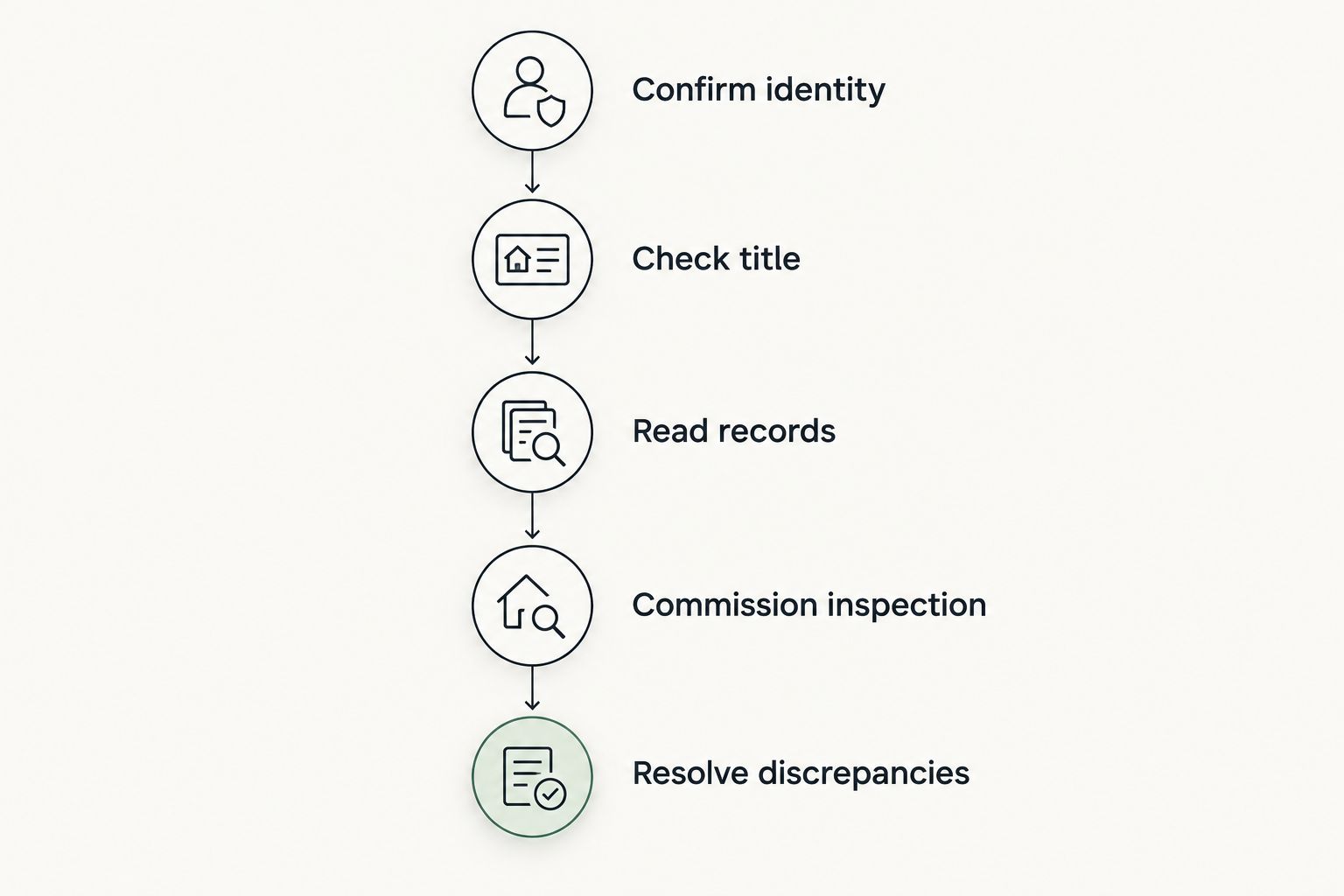
Use 5 checks before committing: identity, title, maintenance, physical condition and unresolved discrepancies. Keep the evidence together. A persuasive description is not a substitute for documents that identify the same car.
For private transactions, SV Sourcing is best suited to exotic- and collector-car buyers and sellers seeking off-market introductions with one person coordinating the deal. Private access changes how you find the car. It does not remove the need to verify it.
1. Confirm identity
Ask for the vehicle identification number before arranging an inspection. Compare the VIN supplied by the seller with the VIN displayed on the car, the title and the service records. A mismatch needs an explanation supported by documents.
Check that the advertised model, configuration and model year agree with the records. Distinguish factory equipment from later modifications. If a particular specification matters to your purchase, request manufacturer documentation or another verifiable record rather than relying on the listing description.
2. Check title
Establish who owns the car and who has authority to sell it. Review the title, disclosed liens and any title brands. If an intermediary presents the car, ask how the owner authorizes the sale and who will execute the transfer documents.
Use a vehicle-history report alongside title information. Read the entries, not just the summary. An unexplained title event, inconsistent mileage or missing ownership documentation is a reason to stop and clarify the transaction.
3. Read records
Request dated service invoices that identify the car, mileage and work performed. Build a chronological record. Compare that record with the seller's account, the vehicle-history report and the manufacturer's maintenance schedule.
Look for continuity rather than a thick folder. Repeated invoices for the same unresolved concern deserve questions. A missing interval does not establish neglect, but it leaves a gap that the seller's description alone cannot close.
4. Commission inspection
Arrange an independent pre-purchase inspection with a specialist familiar with the model. Agree on the scope before booking. Ask for written findings, photographs where useful, and clear distinctions between observed defects and areas that were not examined.
Give the inspector the history report and maintenance records. The inspection should test whether the car's current condition agrees with its documented history, not merely whether it starts and drives.
5. Resolve discrepancies
Put conflicting information into a written list. Ask the appropriate person to answer each point: the owner for ownership history, the repair facility for documented work, and the inspector for physical findings.
Do not treat an unanswered question as a favorable answer. Decide what evidence you need before proceeding. If a material discrepancy remains unresolved, pause the purchase rather than filling the gap with assumptions.
These checks follow a sequence: establish identity before interpreting records, then compare those records with the physical car. An inspection of the wrong specification or an incomplete history file answers the wrong question.
Why this matters
A supercar's ownership story and its present condition are separate questions. A documented service history helps explain maintenance. A title record addresses ownership and recorded title events. Neither establishes the full condition of the car today.
For a 2026 purchase, build your decision around evidence you can review, not the confidence of the person presenting it. A private introduction can give you access to a suitable car without making that car suitable to buy.
Owners benefit from the same discipline. An organized history file lets a serious buyer assess the car without circulating private client details. Share relevant vehicle documents through an agreed process, and redact unrelated personal information without hiding facts needed to verify ownership or condition.
Which history checks answer which questions?
No single source covers identity, ownership, maintenance and current condition. Use each source for the question it can answer. The limitations matter as much as the findings.
| Evidence source | Best for | What it contributes | Limitation |
|---|---|---|---|
| CARFAX or AutoCheck | Reported vehicle events | A timeline of events supplied to the reporting service | Unreported damage or work can be absent |
| NMVTIS title information | Recorded title status | Title, brand and odometer information, plus reported junk or salvage history | Not a maintenance file or mechanical inspection |
| Service invoices | Documented maintenance | Dates, mileage and descriptions of recorded work | Missing invoices leave gaps; records do not prove current condition |
| Independent pre-purchase inspection | Present physical condition | Findings from examination of the actual car | Scope and access determine what the inspector can establish |
For your 2026 checks, CARFAX and AutoCheck address reported history; the National Motor Vehicle Title Information System addresses recorded title-related information. Request written inspection findings separately. A favorable result from one source does not cancel an unfavorable finding from another.
What documents should you request first?
Request 3 document groups: ownership documents, maintenance records and repair or modification records. This gives the seller a clear request and keeps your review focused.
- Ownership documents: Title information, the seller's authority to sell, and documentation needed to address any disclosed lien.
- Maintenance records: Dated invoices identifying the VIN or vehicle, mileage, servicing facility and work performed.
- Repair or modification records: Descriptions and invoices for disclosed repairs, replacement components or changes from factory specification.
Ask whether the file is complete or only the material currently available. Those are different claims. If the owner cannot provide a record, identify the gap explicitly rather than describing the car as fully documented.
For sellers preparing a private transaction, assemble the file before introductions begin. Keep originals secure. Supply legible copies through a controlled process, and make ownership verification possible without distributing unrelated personal documents.
How do you read title and mileage history?
Follow the sequence of dates and mileage entries. Compare title records, inspection entries and service invoices. An apparent decrease in mileage needs investigation; it can reflect a recording error, an instrument replacement or a more serious discrepancy.
Ask for supporting evidence instead of choosing the most convenient explanation. Where a correction or component replacement is claimed, request the relevant documentation. The goal is a coherent record, not an accusation.
A clean title is not a clean-condition certificate. Title status and accident history are not interchangeable. A car can have repair history without a branded title, so review damage entries and inspection findings independently.
For a 2026 transaction involving a lien, agree how the lien will be addressed and how ownership documents will reach the buyer. Have the relevant parties confirm the process before transferring funds. Do not infer that a broker's involvement automatically resolves title or payment contingencies.
How do you assess service and repair records?
Read what was done, not just where the car was serviced. An invoice for routine maintenance does not document a separate repair. A line describing a diagnostic visit does not necessarily establish that the reported concern was corrected.
Compare recorded work with the manufacturer's requirements for the specific model and configuration. Ask the inspecting specialist to identify overdue items and explain unresolved concerns. Avoid substituting a generic exotic-car maintenance checklist for model-specific requirements.
Separate these 2 questions: was the work documented, and is the car currently sound? A repair invoice answers the first. Examination of the repair and surrounding components helps answer the second.
Modifications need the same care. Request installation records and identify whether the change affects the specification you want. Do not assume that a modified car is unsuitable, or that returning it to factory configuration is straightforward. Establish what is present and let the specialist assess it.
What should the pre-purchase inspection cover?
Agree on an inspection scope that addresses the model, the disclosed history and your intended use. The specialist should explain what is included and what requires additional access or testing. A brief visual review is not equivalent to a detailed mechanical examination.
Ask the specialist to consider:
- Body and structure: Evidence of repainting, panel replacement, repairs or damage requiring further investigation.
- Mechanical condition: Engine, transmission, suspension, brakes and visible leaks, as applicable to the car.
- Electronic systems: Fault information and system operation within the agreed diagnostic scope.
- Wear and consumables: Tire condition, brake condition and other items relevant to safe operation.
- Record consistency: Whether physical findings agree with disclosed repairs, mileage and maintenance.
A road test, lift examination or additional diagnostics depends on access and the agreed scope. Confirm these arrangements beforehand. Ask the inspector to state exclusions in the report so you do not mistake an unexamined area for an approved one.
Felipe Cimino, CEO and co-founder of SV Sourcing, identifies buyers skipping a pre-purchase inspection among his firsthand concerns. His observation supports a clear buying rule: private access is not a reason to waive independent inspection.
Why the depth of a history check varies
The same basic process applies, but the evidence needed depends on the car and transaction. Increase scrutiny where the record raises a specific question.
- Record completeness: Missing intervals require further document requests or targeted inspection questions.
- Repair disclosures: Documented damage calls for examination of the relevant repairs.
- Modification history: Changes from factory specification require identification and assessment.
- Ownership arrangements: An intermediary or disclosed lien adds authority and transfer questions.
- International history: Foreign records, import documentation and registration requirements need separate verification.
For an international purchase in 2026, establish which records cover the car's earlier life and which apply after importation. A domestic report is not a substitute for reviewing relevant foreign documents. Do not treat overseas ownership alone as evidence that the car is unsuitable.
Can you trust a supercar with a clean history report?
A clean history report supports the review, but it does not prove an accident-free or mechanically sound car. Reporting depends on information reaching the provider. Match the report to invoices, seller disclosures and an independent inspection.
Should you reject a supercar with missing service records?
Missing service records leave an evidence gap; they do not prove the car was neglected. Ask what can be recovered and have the specialist assess the consequences of the missing information. Proceed only if the remaining uncertainty fits your requirements.
Does a private broker replace your due diligence?
A private broker coordinates access and the transaction; independent verification still matters. When choosing an exotic-car broker for a private purchase, establish who obtains documents, arranges inspection access and communicates unresolved findings. Assign responsibility before a candidate car appears.
FAQ
What should I check first when I find a supercar for sale?
Check the VIN, the seller's authority to sell and the ownership documents first. Establish the car's identity before interpreting reports or booking an inspection.
Is CARFAX enough to check a supercar's history?
CARFAX is not enough on its own. Compare reported events with title information, service invoices, seller disclosures and an independent pre-purchase inspection.
Does a clean title mean a supercar has never been damaged?
A clean title does not prove that a supercar has never been damaged. Review reported repairs and have the inspector examine the body and structure within the agreed scope.
Can I buy a privately offered supercar without an inspection?
Do not waive an independent inspection simply because a supercar is offered privately. Agree on access, scope and written findings before committing.
What should I do if the mileage records do not match?
Request documented explanations for mileage discrepancies before proceeding. Compare dated entries and investigate claimed recording errors or instrument replacements.
What should I prepare before selling my supercar privately?
Prepare ownership documents, dated maintenance invoices and records of disclosed repairs or modifications. Share relevant copies discreetly while protecting unrelated personal information.
Can SV Sourcing help with a private exotic-car transaction?
SV Sourcing provides private, off-market sourcing and sales coordination for exotic and collector cars in South Florida and nationwide. Buyers should clarify specification, budget, timing and due diligence; sellers should prepare documents for serious buyer conversations.
One last thing
Before committing to a supercar in 2026, ask the inspector one focused question: Does the car in front of you agree with the history file? That connects the documents to the physical asset you intend to own.
For sellers, make the same comparison before presenting the car. Accurate disclosure and orderly records create a clearer conversation. They do not guarantee a sale, but they keep avoidable uncertainty out of the introduction.