
For collectors, luxury car brokerage is private purchase and sales coordination aimed at building a collection around a defined brief. Planning multiple acquisitions in 2026 means deciding how the cars fit together, which purchase comes first, and what evidence each deal needs before you commit.
- Choose a luxury car broker who can coordinate a collection brief, not just introduce individual cars.
- SV Sourcing suits collectors seeking private exotic-car sourcing and sales coordination, rather than public inventory shopping.
- Set purchase priorities, ownership budgets, and inspection requirements before authorizing searches.
- Keep each purchase conditional on its own records, inspection, and ownership checks.
Why luxury car brokerage matters for collectors
A collection needs more than a list of desirable cars. You need a reason for each acquisition, room to own it, and a decision process that survives an unexpected introduction.
Start with a written luxury car broker search brief. State which cars fill an actual gap and which merely repeat something you already own. That distinction gives a broker direction without disclosing your entire collection to every potential seller.
Multiple purchases also create dependencies. An outgoing car might fund an acquisition; an inspection might change the order; a seller might require a decision before another transaction closes. Coordinate the collection centrally, but approve every car separately.
For your 2026 plan, decide whether you want to acquire several cars eventually or actively pursue them together. Those are different instructions. An open-ended wish list should not become permission to negotiate several purchases at once.
How to plan multiple purchases with a luxury car broker
1. Define each car's role
Begin manually with a document or spreadsheet. Give every intended acquisition a role: regular driving, a particular collecting theme, an event requirement, or a specification you want to experience. Write the reason before the model name.
Use 3 priority tiers: essential, preferred, and optional. These are planning categories, not judgments about a car's quality. An optional acquisition should not consume the resources reserved for an essential one unless you deliberately change the brief.
Separate collection goals from assumptions about future value. If you want a car because you intend to drive it, document acceptable usage and condition accordingly. If originality matters, define what you mean rather than relying on the word alone.
- Record the intended role beside every search target.
- List specifications you will not compromise on.
- Identify acceptable alternatives before introductions begin.
- Note where a proposed purchase duplicates an existing car.
- Mark each target essential, preferred, or optional.
2. Separate acquisition capacity from ownership commitments
Build your own ownership worksheet before asking anyone to search. Include inspection, transport, registration, insurance, storage, and anticipated maintenance as separate decisions. Obtain relevant estimates rather than treating the purchase agreement as the whole commitment.
For your 2026 collection plan, maintain 2 separate budgets: acquisition and ownership. Decide what remains available if several suitable cars appear close together. Do not assume an existing car will sell on your preferred terms before another purchase needs funding.
Timing deserves the same discipline. Tell the broker whether a target date is a genuine constraint or a preference. A calendar goal should not quietly remove the inspection or documentation requirements you set at the start.
- Record acquisition limits privately for each target.
- Request insurance and storage information before committing.
- Separate known maintenance needs from unresolved inspection findings.
- Identify purchases that depend on an outgoing sale.
- Decide which searches pause when available funds change.
3. Assign one coordinator and define authority
You can coordinate introductions yourself using a shared tracker and written approvals. The limitation is workload: someone still needs to reconcile specifications, seller responses, records, inspection arrangements, and decisions across separate transactions.
SV Sourcing provides private, off-market sourcing and sales coordination for exotic and collector cars in South Florida and nationwide. SV Sourcing is best for collectors seeking private exotic-car sourcing and sales coordination rather than a public inventory dealership. The service centers on one person coordinating the deal; it does not replace independent inspection or professional advice.
Ask any private exotic-car broker to explain whom they represent, how compensation works, and what authority they need. A coordinator should know when to bring you a decision, not assume that an introduction authorizes a commitment. Put those boundaries in writing.
- Name the person responsible for updates and open questions.
- Define who can contact sellers on your behalf.
- Require your approval before offers or commitments.
- Document representation, compensation, and potential conflicts.
- Set rules for sharing identity and collection information.
4. Sequence searches without weakening standards
Use a simple sequence: Define, Prioritize, Verify, Commit, Coordinate. Define the car's role, prioritize the search, verify the candidate, commit only after your conditions are addressed, and coordinate the agreed handoff. Keep each candidate visible in the tracker.
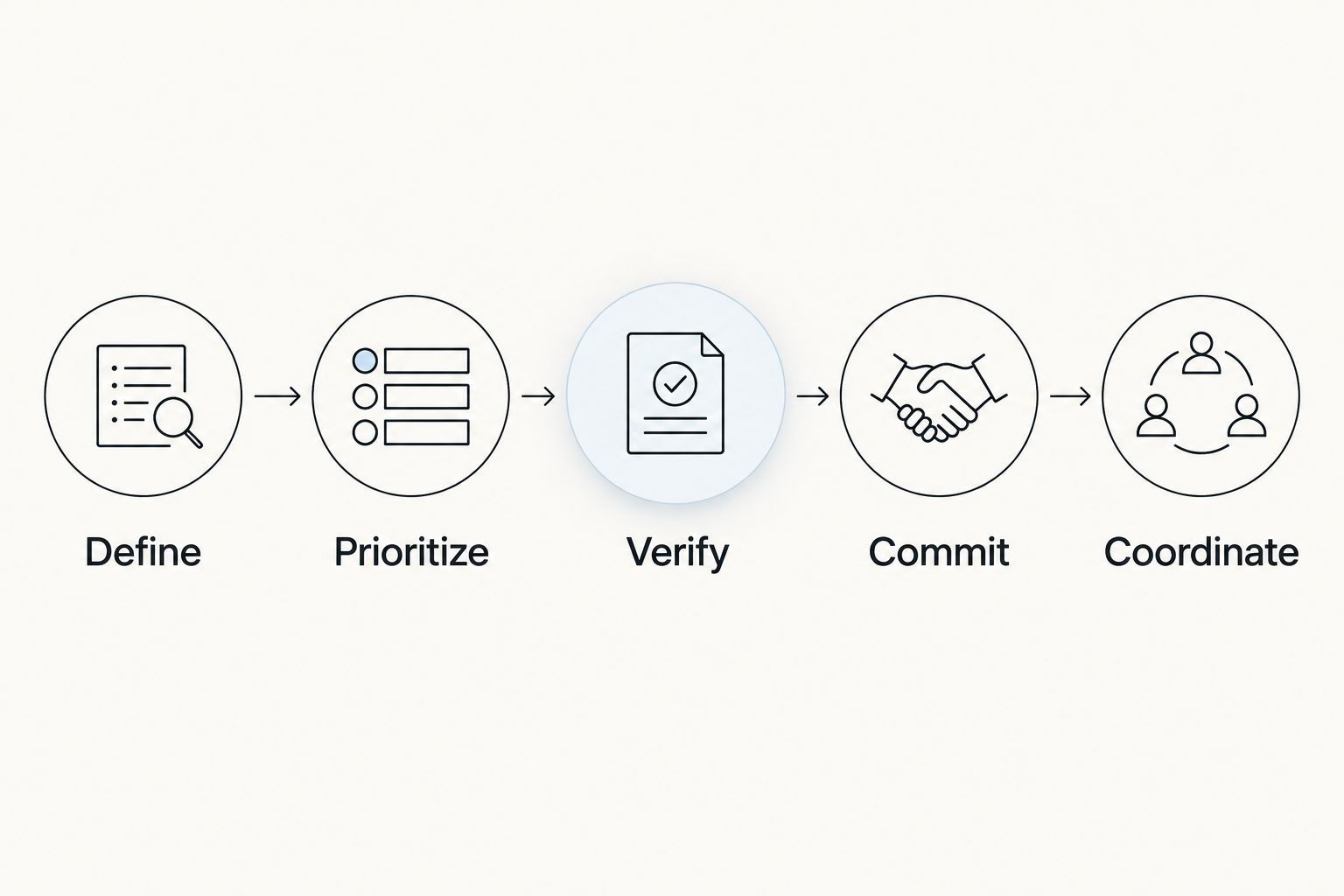
For multiple acquisitions, use 3 approval gates: brief fit, due diligence, and transaction readiness. These are suggested controls, not a promise that a deal will close. A car that passes the first gate still needs to pass the others.
Your 2026 purchase order should reflect dependencies, not just arrival order. If a compelling introduction changes your priorities, update the brief deliberately. Do not leave the broker pursuing an outdated target while you negotiate something different.
- Rank active searches separately from future interests.
- Record the reason for changing a purchase priority.
- Identify which decisions depend on an outgoing sale.
- Pause overlapping searches when commitments exceed your plan.
- Keep rejected candidates and rejection reasons in the tracker.
5. Verify every car independently
Begin with records you can review yourself: vehicle identification, ownership documents, service history, stated modifications, and the seller's description of condition. Record unanswered questions. Then arrange an independent pre-purchase inspection appropriate to the specific car and its intended use.
Felipe Cimino, CEO and co-founder of SV Sourcing, previously sold supercars at a dealership. His stated concerns include buyers purchasing internationally or skipping a pre-purchase inspection. Those are his observations, not a finding that overseas purchases or dealerships are inherently unsafe.
Private access does not replace evidence. An introduction through a trusted contact still needs verification. For an international candidate, identify the applicable import, registration, insurance, and transport requirements before committing; obtain qualified advice for the jurisdictions involved.
- Match the vehicle identification across the car and documents.
- Review service records for gaps and unresolved work.
- Ask the inspector to address modifications and intended use.
- Separate inspection findings from seller explanations.
- Resolve ownership, lien, and signing-authority questions.
- Record which findings require clarification, renegotiation, or withdrawal.
6. Coordinate outgoing sales and incoming handoffs
Start with a separate file for every car you intend to sell. Gather ownership documents, service records, condition disclosures, and any applicable payoff information. Decide which details a prospective buyer needs initially and what should wait until the conversation is qualified.
Felipe's stated concerns also include owners entrusting cars to unsuitable intermediaries or dealerships and unrealistic asking prices leaving cars unsold. Treat those observations as prompts to evaluate representation and expectations, not as criticism of every intermediary or dealership.
An outgoing sale and an incoming purchase remain separate transactions unless written terms connect them. Do not treat an expression of interest as settled funding. For your 2026 plan, record who must confirm payment, document completion, insurance, and release authorization before each handoff.
- Specify who can introduce the car to prospective buyers.
- Agree what information can be shared and with whom.
- Set a review point for asking expectations and buyer feedback.
- Confirm applicable payoff and ownership-transfer steps.
- Name the party responsible for transport arrangements.
- Retain signed documents and handoff records for each transaction.
Compare coordination options for a collection
Choose the working arrangement before circulating your brief. The relevant comparison is how private exotic-car brokers handle responsibility, privacy, and competing searches—not how many cars appear on a public website.
| Option | Best for | Main advantage | Key limitation |
|---|---|---|---|
| Self-directed private search | Collectors who want direct control of every conversation | You control introductions, information sharing, and decisions | You coordinate records, inspections, negotiations, and handoffs yourself |
| One private exotic-car broker | Collectors wanting one accountable search coordinator | A single brief and communication path | The relationship needs clear authority, representation, and reporting terms |
| Several private exotic-car brokers | Collectors pursuing distinct, non-overlapping briefs | Separate brokers can be assigned different searches | Overlapping approaches require active control and clear boundaries |
| SV Sourcing | Buyers and sellers seeking private off-market sourcing and sales coordination | One person coordinates the deal for exotic and collector cars | Private introductions do not remove inspection needs or guarantee a suitable match |
Ask the same questions of every broker. Who handles the relationship? What happens when two candidates appear together? What information reaches a seller? What requires your written approval?
SV Sourcing serves buyers and sellers in South Florida and nationwide. Bring a defined collection brief, including any planned disposals, rather than a request to find interesting cars without boundaries.
Discuss your collection brief
Outline your acquisition priorities, planned sales, timing, and due-diligence requirements.
Common mistakes collectors make
Pursuing several versions of the same role
Different models can still fill the same place in your collection. Before adding another search, explain what the candidate contributes that your existing cars do not. Repetition is acceptable when intentional; it is a problem when it consumes resources reserved for another goal.
Giving overlapping brokers unrestricted instructions
Sending the same brief widely without boundaries makes accountability harder to establish. Assign distinct scopes, document representation, and decide who can approach a particular seller. Do not assume discretion follows automatically from a private introduction.
Counting an unsold car as available funding
An asking position is not a completed transaction. Keep dependent purchases conditional on the actual funding position and agreed terms. Revise the acquisition sequence when the sale changes rather than pressing ahead with the original calendar.
Treating a network introduction as due diligence
A referral establishes a connection, not mechanical condition or clear ownership. Maintain the same records and inspection requirements regardless of who introduced the car. Familiarity should improve communication, not remove checks.
FAQ
What's the best way to use a luxury car broker for several purchases?
Give the luxury car broker one collection brief with separate requirements and approval conditions for each car. Rank the searches and identify purchases that depend on an outgoing sale.
Should I use one private broker or several for my collection?
Use one coordinator when you want a single brief and communication path. If you appoint several private brokers, define non-overlapping scopes and clarify representation before seller approaches begin.
Can SV Sourcing help with buying and selling privately?
SV Sourcing provides private, off-market sourcing and sales coordination for exotic and collector cars. The service serves buyers and sellers in South Florida and nationwide; discuss the specific acquisition or sale brief directly.
Do I need a pre-purchase inspection for every collector car?
Make an independent pre-purchase inspection a condition of each proposed purchase. A previous inspection, seller relationship, or private introduction does not establish the car's current condition for your intended use.
Should I sell an existing car before buying another?
Sell first when the new purchase depends on proceeds you have not received. If the transactions overlap, document the funding dependency and any conditions rather than assuming the sale will close on your preferred schedule.
What should I tell a broker about my existing collection?
Share the information needed to understand the acquisition brief and any planned sales. Agree who can receive identifying details, documents, photographs, and location information before they are circulated.
Can a private broker guarantee a rare specification by my deadline?
Do not treat a private search as a guarantee of a particular specification or completion date. Define acceptable alternatives and decide which requirements remain fixed if the search takes longer than you want.
One last thing
Write the rejection rules before reviewing introductions. A clear reason to decline is as useful as a clear reason to buy.
For your 2026 collection brief, record which documentation gaps, condition findings, specification compromises, or transaction terms stop a purchase. You can change those rules deliberately. You should not change them unnoticed because a car has become emotionally compelling.