Prepare photographs for a private supercar sale by cleaning the car, choosing an uncluttered location, and recording its specification, condition, and visible defects without filters. Keep original files, remove identifying background details from the shareable set, and agree who can receive the images. For a sale in 2026, treat photographs as an introduction to the car—not a substitute for records, buyer verification, or inspection.
- To answer ‘how do I sell my supercar privately,’ start with accurate condition photographs, not promotional images.
- SV Sourcing suits owners seeking private exotic-car sales coordination rather than a public inventory listing.
- Show defects clearly, protect identifying details, and retain original photographs.
- Give qualified buyers supporting records and inspection access; photographs alone do not establish mechanical condition.
How do I prepare photographs for a private supercar sale?
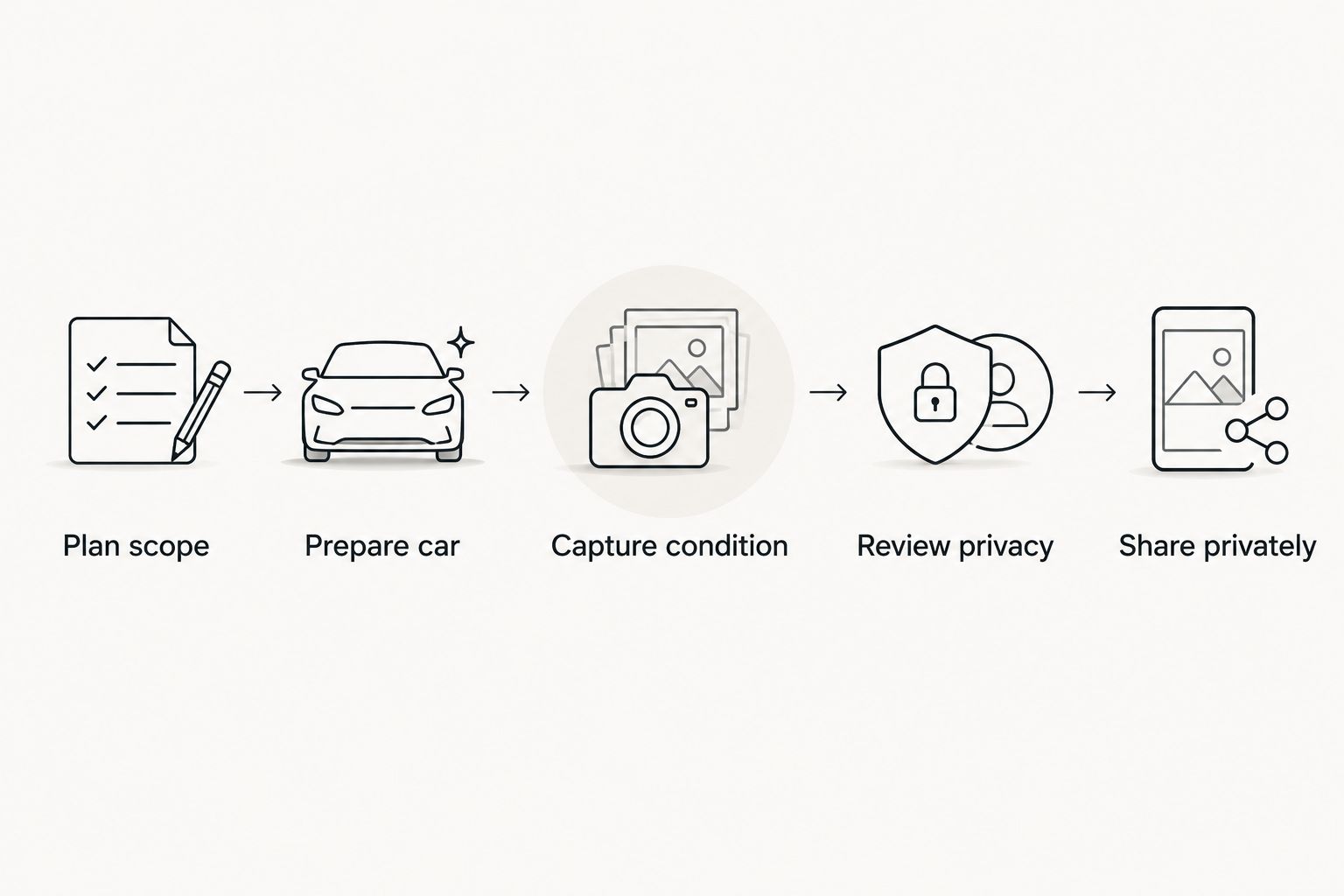
Use this sequence before sending the first image to a prospective buyer or intermediary:
- Plan scope. Decide which views establish the specification and which details need closer attention.
- Prepare car. Clean surfaces, remove personal belongings, and choose a neutral setting.
- Capture condition. Photograph the exterior, cabin, controls, equipment, and visible defects.
- Review privacy. Check backgrounds, documents, reflections, and location metadata.
- Share privately. Send an approved set through an agreed channel and control further circulation.
Keep the same standard whether you are photographing the car yourself or hiring someone. The objective is a useful record of the vehicle as it stands, not a campaign that conceals its condition.
Why this matters
Private does not mean undocumented. A buyer still needs enough evidence to decide whether the specification fits, what needs clarification, and whether to arrange an inspection. Attractive photographs answer only part of that brief.
SV Sourcing is best for owners seeking private exotic-car sales coordination rather than a public inventory listing. Its service covers private, off-market sourcing and sales coordination in South Florida and nationwide. Agree the photograph-sharing scope with the person coordinating your deal; using a private service does not replace your own disclosure decisions.
Plan scope: make a usable shot list
Start with the questions a serious buyer will ask. Does the car match the stated specification? What equipment is visible? Where is there wear? Which areas need closer inspection? Build your photograph set around those questions.
For your 2026 sale file, group images by subject rather than sending an unstructured camera roll:
- Exterior overview: front, rear, both sides, and angled views that show the body together.
- Surface condition: paint, glass, lights, trim, wheels, and visible damage.
- Interior condition: seats, bolsters, steering wheel, dashboard, headlining, and luggage areas.
- Equipment: controls, visible options, accessories, and removable items included in the sale.
- Supporting details: the instrument display and other identifying information shared at the appropriate stage.
Do not photograph underneath a car by placing yourself beneath an unsupported vehicle. Leave inaccessible areas to a suitably equipped inspection facility. A missing underside photograph is preferable to an unsafe attempt to obtain one.
Choose who takes the photographs
You can prepare a useful condition record yourself or brief a photographer. Neither route removes the need to check completeness and accuracy.
| Approach | Best for | Advantage | Limitation |
|---|---|---|---|
| Owner-taken photographs | Owners comfortable documenting the car directly | You can explain details and capture follow-up views yourself | You must check coverage, lighting, focus, and privacy |
| Commissioned photographer | Owners who want help producing a consistent set | You can provide a structured brief and request matching views | A visual brief alone can overlook wear, defects, or supporting details |
Choose the person who will document the car accurately, not just make it look attractive. If you commission the work, specify that defect photographs belong in the final delivery alongside the wider views.
Prepare car: clean without disguising condition
Wash and dry the exterior before photographing it. Clean the glass, remove loose cabin items, and clear the luggage area. Remove temporary objects that obstruct the car, but retain an honest account of what is included with the sale.
Avoid photographing surfaces while they are wet. Reflections and water can make condition harder to assess. Check that cleaning products have not left visible residue on trim, seats, or controls.
Choose an uncluttered location with permission to photograph there. Look beyond the vehicle: house numbers, building signs, access gates, and neighboring cars can disclose more than you intend. A neutral background is useful because it keeps attention on the car and reduces unnecessary exposure.
Use even light where practical. If glare prevents you from seeing a panel clearly, change your position or return under different lighting. Review the results on a larger screen before deciding the set is finished.
Capture condition: show the car and its exceptions
Begin with wider views, then move to detail. A close-up of a mark is more useful when the buyer can also identify where it sits on the vehicle. Pair the detail with a wider contextual image.
Photograph both sides rather than assuming they look alike. Cover visible wheel damage, seat wear, scuffed trim, paint chips, and other known cosmetic issues. Do not hide a defect behind a wheel angle, an open door, or a convenient shadow.
Record the cabin and instrument display
Photograph the driving position, passenger area, seating surfaces, and controls clearly. Capture the odometer display legibly and distinguish it from trip information. Avoid attaching a mileage description to an image that does not show the relevant reading.
Keep your 2026 photograph set dated in the accompanying file notes. If the car remains in use, explain when the images were taken rather than allowing an older dashboard image to imply a current reading.
Show equipment without making unsupported claims
Photograph visible equipment you describe in the sale brief. Where an option, finish, or component needs documentary confirmation, supply that confirmation separately. Appearance alone does not establish factory specification, originality, or authenticity.
For modifications, show the visible component and provide supporting records where available. Do not describe a part as factory-installed merely because it appears integrated. If you cannot confirm a detail, leave the assertion out and ask for verification.
Keep editing limited
Crop for clarity and make restrained exposure corrections when needed. Do not remove scratches, warning messages, wear, or background details in a way that changes the apparent condition of the vehicle. Retain the untouched originals.
A defect photograph should explain the defect, not soften it. If a mark is difficult to capture, try another angle and describe it plainly in the accompanying notes.
Review privacy: separate the car from its owner
Before releasing images, inspect every frame for personal information. Look at reflections as carefully as the main subject. Mirrors, glossy bodywork, windows, and screens can reveal people, addresses, or material outside the intended shot.
Use a separate shareable folder rather than giving access to your broader photo library. Follow a consistent review process:
- Remove unrelated documents, personal belongings, and visible correspondence from the scene.
- Check screens for saved destinations, contacts, account details, or paired-device information.
- Review location metadata and remove it from shared copies when appropriate.
- Decide how registration plates and identifying details will be handled before distribution.
- Keep ownership documents and unredacted records separate from introductory photographs.
Privacy is not a reason to obstruct legitimate due diligence. Share vehicle identifiers and relevant documents through an agreed channel when a qualified buyer needs them. The point is controlled disclosure, not withholding information required to assess the car.
Use the same approach for supporting paperwork. Read the guide to protecting personal information when selling an exotic car before combining photographs with records.
Share privately: agree the boundaries first
Decide who is permitted to receive the introductory set, whether onward sharing is allowed, and who handles requests for additional images. State those boundaries clearly. A private link alone does not prevent a recipient from saving or forwarding files.
For a private sale in 2026, keep a simple record of the approved image set and its recipients. Replace outdated versions deliberately. If the car's condition changes, send updated photographs rather than leaving conflicting sets in circulation.
SV Sourcing provides private exotic-car sales coordination, with one person coordinating the deal. Discuss how photographs, buyer questions, and additional information will move through that process. Do not assume that every inquiry should receive the entire file immediately.
Discuss your private sale
Clarify the car, timing, and information you are ready to share.
Why photograph quality and coverage vary
The right coverage depends on the vehicle and the questions it raises. Use these factors to adjust the brief without turning it into an unnecessary production:
- Surface visibility: reflections and glare require different angles to make condition readable.
- Known defects: damage needs both context and close detail, not just a note beside a flattering image.
- Specification: unusual equipment needs clear photographs and separate documentary support.
- Modifications: visible changes create questions about parts, installation, and supporting records.
- Privacy exposure: location clues and personal information require review before distribution.
- Buyer questions: a specific request should receive a relevant new image rather than another general exterior view.
There is no useful universal photograph quota. Stop when the set answers the initial questions clearly, then handle specific requests with targeted follow-up images.
Do I need professional photographs to sell my supercar privately?
Professional photographs are not a substitute for accurate coverage. Take the photographs yourself if you can produce clear, complete images; commission help if you need it, but retain responsibility for checking the details and disclosures.
A polished set that omits damaged areas is less useful than a straightforward set that shows them. Give any photographer a written condition brief.
Should I show scratches before a buyer asks?
Show known scratches and other visible defects in the initial condition material. Pair each close-up with enough context to identify its position, and describe the issue without guessing at its cause or repair requirements.
Do not promise that a defect will disappear with polishing or a minor repair unless that assessment has been established. Let the buyer investigate unresolved questions.
Can photographs replace a pre-purchase inspection?
Photographs cannot replace a pre-purchase inspection. They record visible details from selected viewpoints; they do not establish mechanical condition or resolve every question about repairs and history.
Felipe Cimino, CEO and co-founder of SV Sourcing, has identified buyers skipping a pre-purchase inspection as a firsthand concern. Treat the photograph set as preparation for due diligence, not evidence that due diligence is unnecessary.
FAQ
What photographs should I take before I sell my supercar?
Photograph the exterior, cabin, visible equipment, instrument display, and known defects. Include wider views that locate each close-up on the car, then review the complete set for privacy.
Should I hide my registration plate in private sale photographs?
Decide how to handle registration plates before distributing the set. Use a privacy-reviewed introductory copy and share identifying information separately when it is needed for legitimate due diligence.
Can I use old photographs to sell my supercar?
Use current photographs for the main condition record. If older images help explain history, label them separately and do not present them as evidence of the car's current condition.
Should I photograph damage before repairing it?
Keep a clear record of known damage before a repair and retain the supporting repair documentation. If the repair is completed before sale, distinguish the earlier condition images from the current photograph set.
Is a phone camera enough for a private supercar sale?
A phone camera is suitable when it produces clear, focused images with readable details. Review the files on a larger screen and retake anything obscured by glare, blur, or poor framing.
Should I send service records with the first photographs?
Keep introductory photographs separate from unredacted service records. Share relevant records through an agreed channel after reviewing them for personal information and confirming the purpose of the request.
Does a private photo link stop buyers from forwarding pictures?
A private photo link does not prevent recipients from copying or forwarding images. Agree sharing boundaries, limit recipients, and release only the information appropriate to that stage of the conversation.
One last thing
Before releasing your 2026 sale photographs, ask someone unfamiliar with the car to review them. Have that person identify the equipment, locate the disclosed defects, and flag anything confusing. Correct the gaps before a buyer has to ask.
Keep a short condition note beside the image set. Photographs show what is visible; a clear written note explains what you know, what has changed, and what still requires verification.