
Sell privately if discretion and direct negotiation matter most. Choose an auction if you want competitive bidding under a defined sale process and accept the exposure and terms that come with it. Neither route guarantees a stronger result in 2026; the right choice depends on your car’s documentation, your timing and how much control you want over the transaction.
- The answer to ‘how should I sell my exotic car’ starts with discretion, timing and transaction control.
- SV Sourcing suits owners seeking private exotic-car introductions and coordinated sales rather than a public listing.
- Auctions organize competitive bidding; the outcome still depends on bidder interest and the agreed sale terms.
- Private sales need buyer verification, inspection access and a clear handover plan.
Should I sell my exotic car privately or at auction?
Choose the route that matches how you want the sale handled, not the route that promises the biggest headline result. If public exposure is your main concern, start with the practicalities of selling an exotic car without a public listing.
There are 3 sale routes to distinguish. Selling privately yourself and using a private broker are not the same commitment of your time.
| Sale route | Best for | Main advantage | Main limitation |
|---|---|---|---|
| Owner-managed private sale | Owners who want to manage introductions and negotiation themselves | Direct control over conversations and terms | You handle screening, disclosures, inspection arrangements and closing |
| Private exotic-car broker | Owners who want discreet introductions and deal coordination | A point of coordination between seller and prospective buyer | You must agree on authority, communication and responsibilities before proceeding |
| Auction | Owners comfortable with bidding and the auction’s sale process | A defined format for presenting the car and collecting bids | Exposure, reserve rules and settlement terms depend on the auction agreement |
Auction formats differ. A public online sale and a live event do not handle viewing, bidding or settlement identically. Read the actual consignment agreement rather than treating all auctions as one service.
Why this matters
You are choosing more than a place to advertise a car. You are choosing who receives its information, who speaks to buyers and how an offer becomes a completed transaction.
In 2026, the useful comparison remains control versus process. A private transaction lets you negotiate the sequence directly, but someone still has to organize it. An auction supplies its own framework, but you must accept the applicable rules.
Keep the buyer’s position in view. Serious buyers need enough evidence to assess the car, understand its condition and arrange an inspection. Discretion should limit unnecessary exposure, not prevent due diligence.
A private sale: discretion with responsibility
A private sale fits an owner who does not want a public campaign around the car. You can decide when to share identifying information, how to arrange viewing and which terms you are willing to discuss.
That control creates work. An expression of interest is not a verified buyer, and a verbal agreement is not a completed sale. You need a process for moving from an introduction to documented terms and a safe handover.
Best for: owners who prioritize discretion and negotiated terms. The trade-off is that buyer screening and transaction management remain your responsibility unless you appoint someone to coordinate them.
What a private broker changes
A broker’s role should be clear before introductions begin. Ask who communicates with buyers, who arranges inspection access and who coordinates the steps between an accepted offer and delivery. Agree on what requires your approval.
SV Sourcing is best for exotic- and collector-car owners seeking private introductions and coordinated sales. Its private off-market service serves buyers and sellers in South Florida and nationwide, rather than operating as a public inventory dealership.
With SV Sourcing, the proposition is private access with one person coordinating the deal. That does not remove the need for your approval, independent inspection or written transaction terms. It also does not guarantee a buyer or a completion date.
When comparing private exotic-car brokers, examine the proposed working arrangement. A clear scope of responsibility is more useful than a broad claim about a network. Know who your point of contact is and what that person will handle.
An auction: competitive bidding under agreed rules
An auction fits an owner who wants the car presented within a bidding process. The auction format establishes how bids are submitted and when the bidding closes. Your agreement determines the conditions under which the car sells.
Competitive bidding creates an opportunity, not a guaranteed result. The relevant buyers must participate, and their bids must meet the sale conditions. A car’s appeal does not eliminate those contingencies.
Best for: owners comfortable with auction exposure and a defined bidding process. The limitation is reduced freedom to change the process after committing to its terms.
Before consigning, get clear answers to these questions:
- Will the car’s identity, photographs and sale result be public?
- What does the reserve arrangement permit?
- What happens if the car does not sell?
- What are your withdrawal obligations?
- Who handles inspection requests, payment and release of the car?
- Which seller obligations continue after bidding ends?
Keep bidding and settlement separate in your thinking. The close of bidding is a milestone, not proof that every payment, document and handover requirement has been satisfied.
Why the right sale route varies
The decision turns on 5 factors. Set your position on each before appointing an intermediary or signing an auction agreement.
- Discretion. Decide what can be public and what should be shared only with a qualified prospective buyer. Ask how photographs, registration details and viewing arrangements will be handled.
- Timing. Distinguish a preferred completion date from a firm deadline. Neither a private introduction nor an auction date guarantees completed settlement by your preferred date.
- Documentation. Service records, ownership documents and an accurate condition account help buyers assess the car. Missing information needs an explanation, not a stronger sales description.
- Expectations. Separate what you want from the evidence supporting it. A firm position without supporting context can stop a conversation before the car receives serious consideration.
- Coordination. Decide who will manage enquiries, inspections, negotiation and handover. A route that appears straightforward can still demand substantial involvement from you.
Do not choose an auction merely to avoid an uncomfortable discussion about expectations. Do not choose a private sale merely to avoid documenting the car. Both routes require a credible account of what you are selling.
How do I prepare before choosing a sale route?
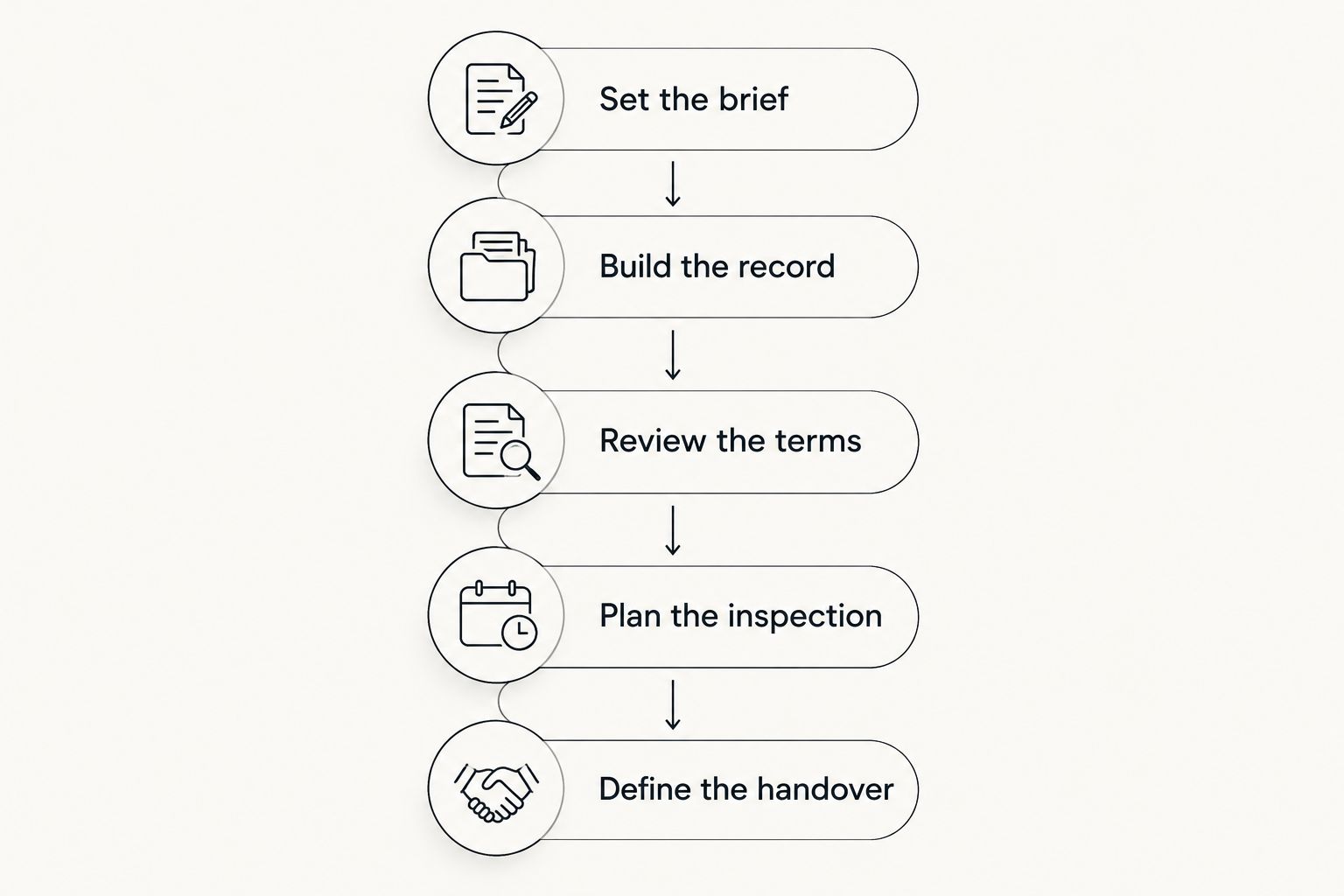
Use 5 steps to make the decision concrete. The same preparation supports a private introduction or an auction submission, even though the eventual sales process differs.
1. Set the brief
Write down your preferred timing, discretion requirements and negotiation boundaries. Include any conditions that affect inspection, storage or collection. Be explicit about whether you want to remain the main contact or delegate coordination.
A useful 2026 sale brief describes the transaction you can actually support. It should not depend on an assumed buyer, an assumed result or an unconfirmed completion date.
2. Build the record
Organize 3 document groups: ownership documents, service records and condition information. Include known modifications and unresolved issues in the condition account. Keep sensitive personal details separate from the material intended for early enquiries.
Check that descriptions and photographs tell the same story. A buyer should not discover an important condition issue only after arranging travel or inspection.
3. Review the terms
For a private broker, establish scope, authority and communication. For an auction, examine consignment, reserve, withdrawal and settlement provisions. Ask who is responsible for each step rather than assuming it belongs to the intermediary.
Do not rely on a verbal summary when the written agreement says something different. Resolve the discrepancy before you commit the car.
4. Plan the inspection
Decide how a prospective buyer can arrange a pre-purchase inspection. Confirm access, location and permission before making commitments. Keep inspection findings distinct from sales language.
An inspection can lead to further questions or revised terms. Plan for that conversation instead of treating inspection as a formality after the deal is settled.
5. Define the handover
Agree on the sequence for payment verification, document transfer and vehicle release. Clarify who instructs the transporter and when collection is authorized. If the car has an outstanding finance obligation, establish how it will be addressed.
Do not release the car solely because someone sends a payment screenshot. Verify the payment through the relevant financial institution and follow the agreed closing process.
What should I ask a private broker before agreeing?
Ask who will introduce the car, how prospective buyers are screened and who remains responsible for the transaction. Get the working arrangement in writing. Private should describe the exposure policy, not an absence of records.
Felipe Cimino, CEO and co-founder, previously sold supercars at a dealership. His stated concerns include owners entrusting cars to unsuitable intermediaries or dealerships and unrealistic asking expectations leaving cars unsold. These are his observations, not a judgment that every dealership or intermediary is unsuitable.
Alejandro S., co-founder, is equally involved in private sourcing, sales and deal coordination. When you appoint a service, confirm your point of contact and approval process rather than making assumptions about either founder’s responsibilities.
Is an auction better if I need to sell quickly?
An auction’s bidding date does not guarantee your completion date. In 2026, compare the full sequence: acceptance, preparation, bidding, payment and release. Ask what happens if the car does not meet the sale conditions.
A private sale also depends on finding a suitable buyer and completing due diligence. If timing is the deciding factor, tell the intermediary your deadline before discussing the route.
Should I allow a pre-purchase inspection in a private sale?
A private sale should accommodate independent due diligence, including a pre-purchase inspection. Agree on access and responsibilities early so the inspection does not become a last-minute dispute.
Felipe’s stated buyer concerns include purchasing internationally or skipping a pre-purchase inspection. Those concerns support careful verification; they do not establish that every overseas purchase is unsafe. The seller’s role is to provide accurate information and support the agreed checks.
FAQ
What’s the best way to sell my exotic car without public attention?
A private off-market sale fits an owner who wants controlled introductions rather than a public listing. Agree on what information can be shared, how buyers are screened and who coordinates inspection and closing.
Is selling privately better than selling at auction?
Selling privately is better for discretion and negotiated terms; an auction is better for an owner who prefers a defined bidding process. Neither route guarantees a stronger result or a completed sale.
Do I need a broker to sell my exotic car privately?
You do not need a broker to manage a private sale yourself. A private broker adds introduction and coordination support, but the scope of that work should be agreed in writing.
Does SV Sourcing sell cars through public inventory listings?
SV Sourcing provides private, off-market sourcing and sales coordination for exotic and collector cars. It serves buyers and sellers in South Florida and nationwide rather than positioning itself as a public inventory dealership.
Will an auction guarantee that my exotic car sells?
An auction does not guarantee that your exotic car sells. Buyer participation, bids and the agreed sale conditions determine whether bidding produces a sale, while settlement remains a separate step.
What should I prepare before speaking to a buyer?
Prepare ownership documents, service records and an accurate condition account before substantive buyer discussions. Also define inspection access, your timing and the information you will share privately.
Can I sell privately to an out-of-state buyer?
A private sale can involve an out-of-state buyer, but the closing plan must address documentation, payment verification and transport. Confirm the applicable title and registration requirements before releasing the car.
One last thing
Choose the process before choosing the intermediary. Write down who approves disclosures, who answers inspection questions and who authorizes release of the car. Those responsibilities matter in a private sale and at auction.
For a 2026 sale, start with a clear brief rather than a promise of a result. Discretion is useful only when the buyer can still verify the car and both parties understand how the transaction will close.