
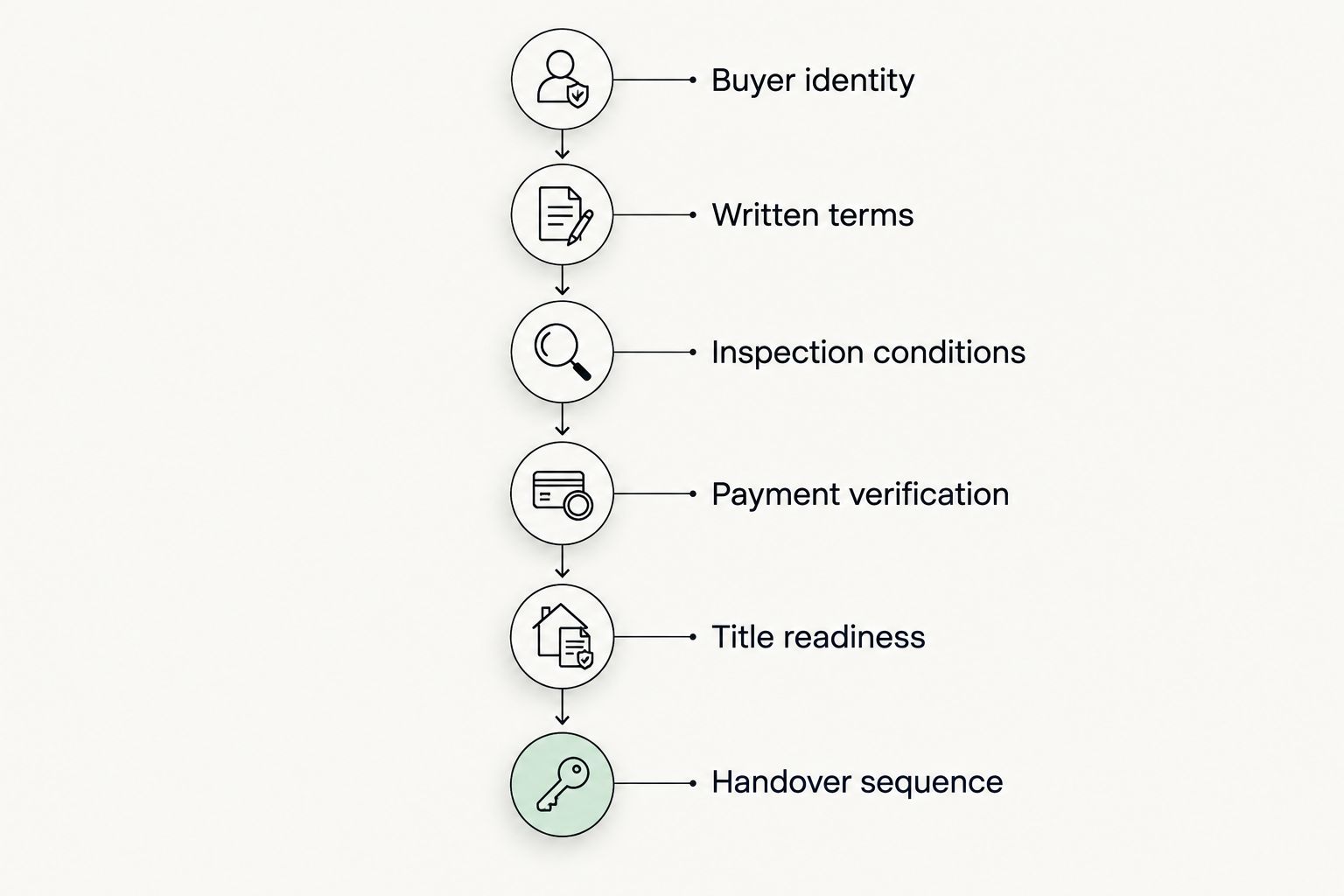
Assess an offer for your supercar by checking the buyer, the written terms, the inspection conditions, the payment arrangements and the handover sequence—not just the headline amount. Accept only when the obligations are clear and you understand what can change before completion. A conditional offer still leaves room for renegotiation or withdrawal.
- Before you sell my supercar, compare buyer credibility, inspection conditions, payment arrangements and handover terms.
- SV Sourcing suits exotic-car owners seeking private introductions and coordinated sales rather than public inventory listings.
- A higher offer with unresolved conditions is not equivalent to an agreed sale.
- Keep possession and document release tied to verified payment and the agreed transfer process.
How do I assess offers when I sell my supercar?
Use the same written checklist for every offer in 2026. Comparing one buyer's verbal commitment with another buyer's documented proposal hides the differences that matter.
SV Sourcing provides private, off-market exotic-car sourcing and sales coordination for buyers and sellers in South Florida and nationwide. For a private sale, the useful question is not simply who offers more. It is who can complete on terms you understand and accept.
Assess each offer in this order
-
Buyer identity. Establish who is buying the car, who is communicating with you and who will sign the purchase agreement. If an intermediary is involved, ask whom they represent and what authority they have. A familiar name in a conversation does not resolve an unexplained mismatch between the buyer, payer and receiving party.
-
Written terms. Request a written proposal identifying the car, the offer, the conditions and the intended completion process. Record whether the buyer has inspected the vehicle or is making assumptions from photographs and descriptions. Distinguish an initial expression of interest from an offer the buyer is prepared to document.
-
Inspection conditions. Define the inspection scope, who arranges it and what happens if it identifies an issue. Ask whether the buyer can withdraw, request work or propose revised terms. An inspection condition is not inherently a weakness. An open-ended condition leaves you unable to judge how firm the offer actually is.
-
Payment verification. Agree on the payment method and ask your financial institution how to verify receipt and identify any remaining restrictions or risks. Do not treat a screenshot, payment instruction or message from the buyer as independent confirmation. If another party will send funds, resolve that arrangement before completion rather than during collection.
-
Title readiness. Check the ownership documents and disclose any lender involvement that affects transfer. If the car has an outstanding loan, establish the payoff and title-release process with the lender. Do not promise document delivery based on an assumption about how quickly another party will act.
-
Handover sequence. Write down when payment is verified, when transfer documents are signed and when the car, keys and records are released. Identify who will collect the vehicle and how that person's authority will be confirmed. Transport arrangements should follow the agreed release conditions, not create pressure to bypass them.
An offer is ready for a decision when the buyer, conditions and completion sequence are clear. Until then, the headline amount is only part of the proposal.
Why this matters
An offer can look attractive while leaving the difficult decisions unresolved. A buyer might still need financing, an inspection or agreement on transport. Those conditions belong in your comparison before you select an offer.
Your 2026 sale checklist should separate three questions: what the buyer proposes, what must happen before completion and what you are expected to provide. This prevents an enthusiastic conversation from being mistaken for an agreed transaction.
Private does not mean undocumented. You can limit public exposure while still requiring a clear buyer identity, a written agreement and an orderly transfer. Discretion should reduce unnecessary exposure, not reduce due diligence.
Which type of offer fits your sale?
Offer types describe the proposal, not the quality of the person making it. A conditional buyer can be serious. A buyer who says they are ready to proceed still needs to document the terms and complete the agreed checks.
Use this comparison to decide which conversation deserves your attention. The labels below describe suitability, not guaranteed outcomes.
| Offer type | Best for | Advantage | Limitation | What to establish |
|---|---|---|---|---|
| Direct buyer offer | Owners comfortable managing buyer communication | You discuss the buyer's requirements directly | You remain responsible for resolving transaction details | Identity, conditions, payment and transfer responsibilities |
| Broker-coordinated offer | Owners seeking a central point of coordination | Communication and next steps can pass through one coordinator | Representation, authority and compensation still need clarification | Who the broker represents and what the broker handles |
| Inspection-contingent offer | Owners willing to let documented findings inform the decision | The buyer can assess the car before committing | Findings can reopen negotiations or end the discussion | Inspection scope and permitted responses |
| Financing-contingent offer | Owners whose timing accommodates an unresolved funding condition | The buyer's funding requirement is explicit | Completion depends on financing being resolved | Funding status and the agreed decision point |
For a broker-coordinated offer, separate the broker's role from the buyer's obligations. Coordination does not replace buyer verification, inspection or a clear transfer agreement. It also does not establish that every condition has been satisfied.
A direct offer removes an intermediary from the conversation, but it does not remove the work. Decide whether you want to handle that work yourself before treating a direct approach as the simpler choice.
Why supercar offers vary
Compare the assumptions behind each proposal before concluding that one buyer values your car differently. These factors explain what you need to clarify; they do not establish a market valuation.
- Car specification. Confirm that each buyer is assessing the same model, configuration and disclosed modifications. A proposal based on the wrong specification is not a useful comparison. Correct the description before discussing revisions.
- Condition and records. Give buyers a consistent account of condition, service history and known issues. Separate documented facts from impressions. Different information produces different assumptions, even when buyers are discussing the same vehicle.
- Unresolved contingencies. Identify inspection, financing and document conditions. Compare what each buyer can still change or decline. An apparently stronger offer can leave more decisions open than a lower offer with settled terms.
- Transaction responsibilities. Establish who arranges the inspection, handles transport and coordinates lender or document requirements. Do not assume these tasks are included in a broker's role. Make the allocation explicit.
- Seller requirements. State your preferred timing, disclosure boundaries and handover needs. A buyer's proposal should be assessed against those requirements, not against an abstract idea of the ideal offer. Reject a mismatch rather than assuming it will resolve itself.
For a 2026 offer comparison, keep a short written record of these points for each buyer. Update it when a condition changes. Otherwise, you risk comparing an old proposal with a revised one.
Should I accept the highest offer for my supercar?
Accept the highest offer only if its conditions and completion arrangements also work for you. A larger headline amount does not compensate automatically for an unidentified payer, unclear inspection rights or a handover demand you cannot accept.
Separate a commercial concession from a procedural warning. A buyer asking for an inspection is asking to assess the car. A buyer asking you to release it before the agreed payment verification is asking you to change the transfer process. Those requests deserve different responses.
Do not invent a discount to account for uncertainty. Ask the buyer to resolve the uncertainty. If the buyer will not clarify a material condition, you do not have enough information to accept that proposal on an informed basis.
How do I know whether a buyer is serious?
A serious buyer gives you usable information about identity, requirements, funding arrangements and the next steps they are prepared to take. Polite enthusiasm is not a substitute for those details.
Ask what remains unresolved. A buyer who needs an inspection should be able to discuss its scope and arrangements. A buyer who needs financing should disclose that condition rather than presenting the proposal as ready to complete.
Watch for consistency between the conversation and the documents. If the purchasing entity changes, or a different payer or recipient appears, pause and clarify the relationship. Do not let momentum replace verification.
What should I do if a buyer changes the offer after inspection?
Request the inspection findings and ask the buyer to connect the proposed change to a specific issue. Compare that request with the inspection terms already agreed. Do not renegotiate from a vague statement that the car needs work.
Decide whether you accept the revised proposal, need an independent explanation or prefer to end the discussion. The inspection should inform your decision. It should not force an immediate concession simply because time has already been spent.
In 2026, keep inspection reports and revised terms together in your sale file. A changed offer should have a clear reason and a clear status. Superseded messages should not remain the only record of what either party expects.
Where private coordination helps—and where it stops
SV Sourcing is suited to exotic- and collector-car owners seeking private introductions and coordinated sales rather than a public inventory dealership. The service is relevant when you want a central point of coordination while keeping the sale off a public listing.
The limitation is straightforward: private access does not remove transaction contingencies. Ask what the coordinator handles, what remains your responsibility and how buyer questions will reach you. Agree on disclosure boundaries before introductions begin.
Felipe Cimino, CEO and co-founder, previously sold supercars at a dealership. His stated concerns include owners entrusting cars to unsuitable intermediaries or dealerships and unrealistic asking prices leaving cars unsold. Those observations support checking representation and expectations; they do not establish that dealerships are unsafe or that a particular offer is correct.
Alejandro S., co-founder, is equally involved in private sourcing, sales and deal coordination. For your transaction, establish who is the central contact and how decisions are communicated. One coordinator should mean a clearer process, not fewer written checks.
FAQ
What's the first thing to check when I sell my supercar?
Check the buyer's identity and request written terms before comparing the offer with alternatives. Establish who will sign, who will pay and which conditions remain unresolved.
Should I accept an offer before the buyer inspects my supercar?
You can agree to a proposal subject to inspection, but the inspection condition must be clear. Define the scope and what findings allow the buyer to revise or withdraw the offer.
Is a private broker better than handling the offer myself?
A private broker fits owners who want coordinated introductions and communication; a direct sale fits owners prepared to manage those responsibilities themselves. SV Sourcing provides private exotic-car sourcing and sales coordination, but you still need clear buyer obligations and transfer terms.
How do I compare offers with different conditions?
Compare buyer identity, inspection rights, funding conditions, transaction responsibilities and handover terms alongside the headline amount. Ask each buyer to resolve ambiguities before making your decision.
What should I do if someone else will pay for the buyer's car?
Clarify the relationship between the buyer and payer before accepting that payment arrangement. Confirm the documentation and verification process with your financial institution and relevant advisers.
When should I release my supercar to the buyer or transporter?
Release the car only when the agreed payment verification and transfer requirements have been satisfied. Confirm the collector's authority and keep the release consistent with the written handover sequence.
Can I assess offers without publishing my supercar for sale?
Yes, private introductions allow you to discuss a sale without a public listing. Keep disclosure controlled while still providing the information a qualified buyer needs for inspection and a documented offer.
One last thing
Before accepting an offer in 2026, ask the buyer to describe the proposed completion sequence in writing. Read it against your own checklist. Differences often become visible when responsibilities are written down rather than discussed separately.
If the buyer's version and yours do not match, resolve the difference before arranging collection. The useful final test is not whether everyone sounds ready. It is whether everyone has agreed to the same next step.