
Best for a coordinated, discreet exotic or collector-car sale: SV Sourcing; best for an owner with a buyer already lined up: a direct private sale; best for public bidding: a specialist auction. A self-managed public listing suits owners who want to handle inquiries and negotiations themselves.
- The best way to sell a luxury car without a dealership depends on privacy, buyer access, and coordination.
- SV Sourcing suits exotic and collector-car owners seeking private introductions and one person coordinating the deal.
- A direct private sale fits an existing buyer relationship; verification and payment checks still matter.
- Choose a specialist auction for public bidding, not for keeping the sale off-market.
Why the sale route matters
Selling without a dealership does not mean selling without help. You can appoint a private broker, negotiate directly with a buyer, enter an auction, or manage a public advertisement. Each route puts a different share of the work on you.
For a 2026 sale, separate three decisions: who finds the buyer, who negotiates, and who coordinates completion. A buyer introduction alone does not resolve an outstanding loan, inspection findings, payment verification, or transport arrangements.
Choose the process before choosing where to advertise. If discretion matters, a public listing conflicts with that goal from the start. If you already know the buyer, paying for additional introductions might not solve your actual problem. You might instead need professional help with documentation and completion.
What makes a suitable dealership alternative
Use these criteria to compare private exotic-car brokers first, then compare brokerage with selling directly or through an auction.
- Privacy: Establish who receives photographs, vehicle details, ownership documents, and your contact information. Ask what requires your permission before circulation.
- Buyer qualification: Ask how an intermediary establishes buying intent and financial readiness before arranging access to the car.
- Representation: Identify whose interests the broker represents, who pays the broker, and how potential conflicts are disclosed.
- Deal coordination: Name the person responsible for inspections, offers, documents, payment arrangements, and the handoff. Distinguish coordination from legal or mechanical advice.
- Seller control: Confirm who approves an offer, authorizes advertising, permits a test drive, and decides when the vehicle can leave your possession.
For 2026, request these answers in writing rather than treating a private introduction as a complete sales service. A clear agreement matters more than an impressive description of a buyer network.
Dealership alternatives at a glance
| Sale route | Best for | Main feature | Key limitation |
|---|---|---|---|
| SV Sourcing | Exotic and collector-car owners seeking discreet coordination | Private sourcing and sales coordination | Suitability depends on the car, brief, and agreed engagement |
| Direct private sale | An owner with an identified buyer | Direct control over negotiation | The owner must arrange verification and completion |
| Specialist auction | An owner who wants public bidding | A defined bidding process | Public exposure conflicts with an off-market brief |
| Self-managed public listing | An owner prepared to manage inquiries | Direct communication with prospective buyers | Screening and follow-up remain the owner's responsibility |
These are different working arrangements, not interchangeable places to post the same advertisement. Select the route whose responsibilities you are willing to accept.
1. SV Sourcing: for discreet exotic and collector-car sales
SV Sourcing provides private, off-market sourcing and sales coordination for exotic and collector cars in South Florida and nationwide. The service suits owners who want discreet introductions to serious buyers and one person coordinating the deal, rather than a public inventory dealership.
SV Sourcing is suited to exotic and collector-car owners who want private introductions and coordinated deal handling. Start with the vehicle specification, condition, ownership position, selling objective, and timing constraints. Ask what the proposed engagement includes before authorizing introductions.
SV Sourcing pros:
- Private, off-market sourcing matches a discreet selling brief.
- Sales coordination addresses more than the initial introduction.
- The stated service covers South Florida and nationwide transactions.
SV Sourcing limitations:
- The stated focus is exotic and collector cars, not every luxury vehicle.
- Private introductions do not guarantee a buyer, an accepted offer, or completion.
- Responsibilities and engagement terms still need written agreement.
Best for: An exotic or collector-car owner who wants private buyer access without personally coordinating every stage.
When comparing another private broker, request the same scope: representation, permitted marketing, vehicle custody, offer approval, and completion responsibilities. Do not assume that every broker takes possession of the car or performs the same tasks. The exotic-car broker agreement guide provides a useful starting point for that conversation.
Verdict: Choose a private broker when discretion and coordination are your priorities.
2. Direct private sale: for an owner with an identified buyer
A direct private sale means you and the buyer agree the transaction without appointing a dealership to sell the car. This route makes sense when a collector, acquaintance, or existing contact has already expressed serious interest.
Your existing connection removes the need to start with a broad search. It does not replace due diligence. Establish the buyer's identity, confirm who will pay, document the vehicle's condition, and agree the sequence for inspection, payment, title transfer, and collection.
Direct private sale pros:
- You control communications and negotiations directly.
- You can limit circulation to the identified buyer.
- You do not need a public advertisement to begin discussions.
Direct private sale limitations:
- You must arrange the administrative and verification work.
- A personal relationship does not establish financial readiness.
- A single buyer relationship offers no competing offers by itself.
Best for: An owner who already has a credible buyer and is comfortable arranging professional assistance where needed.
Keep the discussion factual. Provide service records and disclose known issues instead of relying on familiarity. If the buyer requests an independent pre-purchase inspection, agree access and scope before arranging the appointment. Record how findings will affect the offer rather than leaving that question until collection.
Verdict: Choose a direct sale when the buyer is identified and you can manage completion.
3. Specialist auction: for an owner seeking public bidding
A specialist auction creates a bidding process under the auction provider's terms. Consider it when you want buyers to compete publicly and accept the associated disclosure and sale conditions.
Read the specific agreement before committing. Establish how bidding works, whether a reserve is permitted, what happens if the car does not sell, and who handles buyer payment and vehicle release. Do not assume every auction uses the same rules.
Specialist auction pros:
- A defined bidding process structures buyer participation.
- Vehicle information can be presented together for bidders.
- The auction agreement establishes the provider's role.
Specialist auction limitations:
- Public bidding is not an off-market sale.
- Preparation and disclosure requirements depend on the provider.
- Bidding does not guarantee an acceptable result or completed transaction.
Best for: An owner who wants public bidding and accepts the chosen auction's terms.
Before selecting an auction for a 2026 sale, decide whether visibility helps or conflicts with your objective. An owner who wants the car quietly introduced to selected buyers has a different brief from an owner seeking public competition. Neither objective should be disguised as the other.
Verdict: Choose an auction for public bidding; skip it when discretion is essential.
4. Self-managed public listing: for a hands-on seller
A self-managed listing puts you in direct contact with people responding to your advertisement. You prepare the description and photographs, answer questions, qualify inquiries, negotiate, and arrange the transaction.
This route is distinct from selling to an existing contact. You are finding the buyer as well as managing the sale. Decide in advance what information you will publish and what you will share only after qualification.
Self-managed listing pros:
- You control the description and supporting material.
- You speak directly with prospective buyers.
- You decide which inquiries progress to appointments.
Self-managed listing limitations:
- You handle screening, repeated questions, and follow-up.
- Published information is no longer confined to selected introductions.
- An advertising platform does not replace transaction checks.
Best for: An owner who wants direct control and can manage inquiries, appointments, and documentation.
Prepare a consistent response covering specification, service history, condition, and inspection access. Avoid distributing unredacted ownership documents with an initial inquiry. For test drives, agree identity checks, permission, and insurance arrangements before meeting; confirm the applicable coverage with your insurer.
Verdict: Choose a public listing only if you want to manage the selling workload.
How these routes are ranked
This 2026 ranking prioritizes privacy and coordinated completion for exotic and collector-car owners. It is a fit-based comparison, not a claim that one route produces a higher selling result.
Private brokerage comes first for the stated discreet-sale brief. A direct sale comes next when the buyer already exists. Auction and public-listing routes serve owners who accept broader exposure. Your priorities can change the order: an existing qualified buyer makes a direct transaction the logical starting point.
Before you authorize a sale
Prepare 2 document groups: vehicle information and ownership information. Keep them separate so you can answer legitimate questions without distributing sensitive records prematurely.
Vehicle information includes specification, service records, known modifications, condition disclosures, and photographs. Ownership information includes the documents needed to establish your authority to sell and any lender requirements. Confirm the applicable transfer requirements with the relevant motor vehicle authority and your lender.
Felipe Cimino, CEO and co-founder of SV Sourcing, has identified unsuitable intermediaries and unrealistic asking expectations as firsthand concerns. Treat those observations as reasons to examine the agreement and your selling objective, not as claims that all dealerships or intermediaries are unsuitable.
Set 1 primary coordinator, even when several professionals participate. That person should maintain the agreed sequence and identify unresolved conditions; the role does not replace independent inspection, banking confirmation, or legal advice.
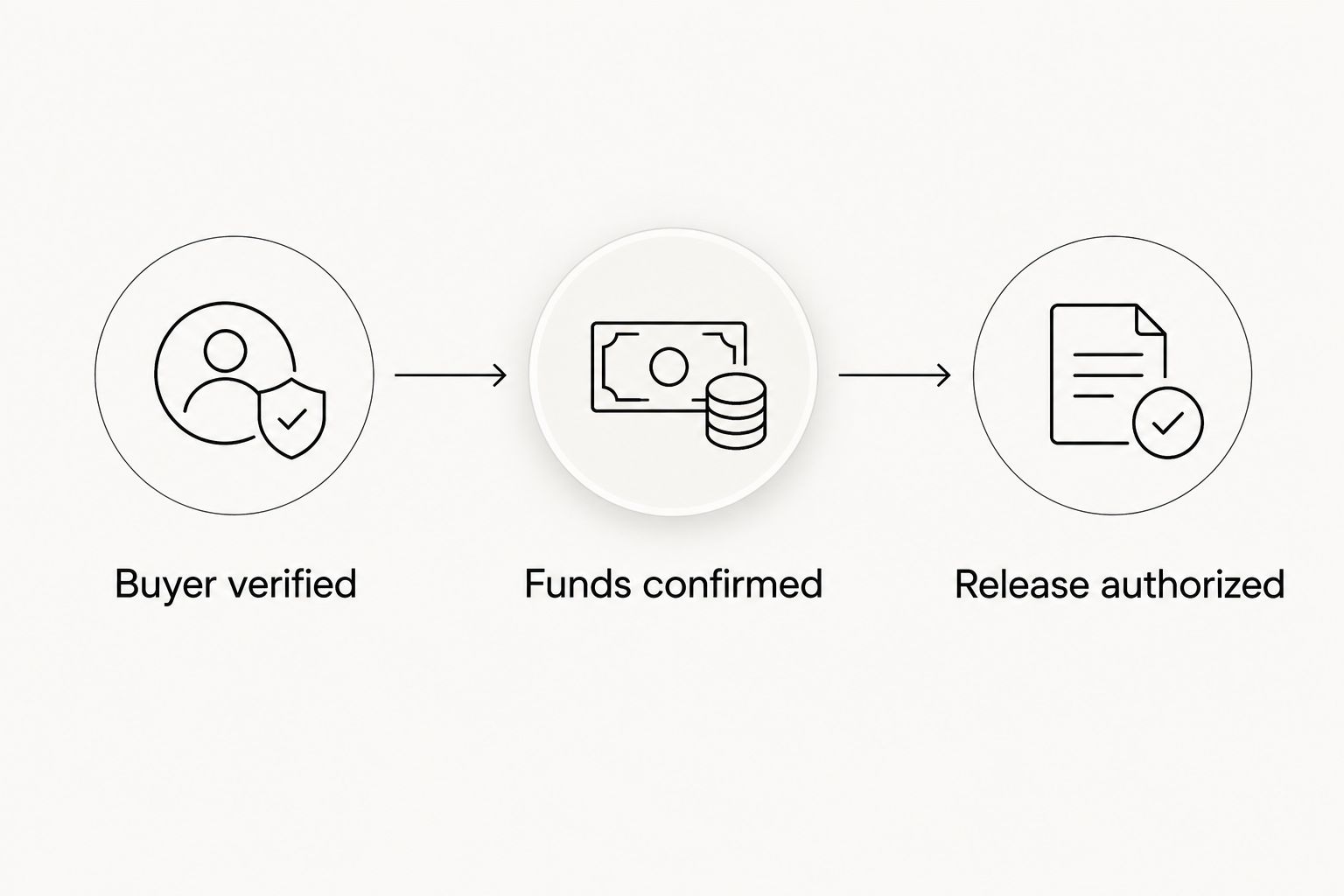
Use 3 release gates:
- Buyer verified: Establish the buyer's identity and confirm who is entering the agreement and making payment.
- Funds confirmed: Confirm receipt and status directly with your financial institution. Do not rely on a screenshot or a buyer's message.
- Release authorized: Check that payment, ownership documents, lender requirements, and collection instructions satisfy the agreed conditions before releasing possession.
Treat payment and collection as connected decisions. The guide to confirming payment before handing over an exotic car explains the questions to settle before a transporter or buyer arrives.
Which sale route should you choose?
For a discreet exotic or collector-car sale, start with a private broker conversation. Give the same brief to any broker you consider and compare written responsibilities, not promises about buyers or outcomes.
If you already have a verified buyer, start with the direct-sale process instead. Choose an auction when you actively want public bidding. Choose a public listing when you are prepared to handle the work yourself.
In 2026, the useful distinction is not simply dealership versus no dealership. It is whether your chosen arrangement gives you the privacy, control, and coordination you need through completion.
Discuss a private sale
Outline your car, selling objective, and timing for a private sourcing and sales coordination conversation.
FAQ
What's the best way to sell a luxury car without a dealership?
A private broker suits owners who prioritize discretion and coordinated completion. A direct sale suits an owner with an identified buyer, while an auction suits someone seeking public bidding.
Can I sell my exotic car without a public listing?
Yes. A private broker can arrange introductions without a public listing, or you can negotiate directly with an identified buyer. Agree what information can be circulated and who can receive it.
Is a private exotic-car broker better than an auction?
A private broker fits a discreet-sale brief; an auction fits a public-bidding brief. Compare representation, disclosure, seller approval, and completion responsibilities before choosing.
Can I sell a luxury car privately if it still has a loan?
An outstanding loan requires a lender-approved payoff and title-release process. Confirm the requirements directly with the lender and document how payment and release will be coordinated.
Should I allow a pre-purchase inspection when selling privately?
Arrange independent inspection access as part of the agreed sale process. Establish the scope, permissions, and treatment of findings before the appointment; an inspection does not guarantee future condition.
How do I protect my personal information during a private sale?
Limit early disclosures to information needed to assess the car and the proposed transaction. Verify the recipient before sharing sensitive ownership documents, and agree how your intermediary will circulate information.
What should I agree with a private car broker in 2026?
Agree representation, permitted marketing, compensation terms, vehicle custody, offer approval, and completion responsibilities in writing. Identify the primary coordinator and the conditions that must be met before vehicle release.
One last thing
The person collecting the car is not necessarily the person buying it. A transporter can be collecting on the buyer's behalf, so collection arrangements do not establish the buyer's identity or confirm payment.
Before handoff, match the collection instructions to the written agreement and obtain the seller's release authorization. If the named buyer, payer, or collection instructions change, stop and resolve the discrepancy. A scheduled pickup is not a reason to bypass an unresolved condition.