
Best for coordinated private sourcing: SV Sourcing. Best for a narrowly defined specification: a marque-focused private broker. Best for an identified car: the owner's appointed broker. Best for direct control: an owner-to-owner purchase. These are the off-market routes to compare in 2026; choose by the work you need handled, not the promise of a private introduction.
- SV Sourcing suits buyers seeking private exotic-car sourcing with one person coordinating the deal.
- The best off-market exotic car buying options pair private access with documented due diligence.
- A marque-focused broker fits a precise search; an owner's broker fits an already identified car.
- Direct owner purchases give you control and leave inspection, documentation, and handoff coordination with you.
Why this matters
Off-market describes how a car is introduced. It does not establish condition, ownership, value, or the intermediary's authority to act. A private introduction starts the review; it does not replace it.
For your 2026 search, separate access from representation. Who finds the car? Who represents the seller? Who coordinates inspection and documents? Those answers matter more than whether the car appears on a public listing.
Owners face the same issue from the other side. Discretion requires clear permission to share information, qualified introductions, and an agreed process for viewing and inspection. It does not require withholding the evidence a serious buyer needs.
What makes the best off-market buying route
Use these criteria before choosing an intermediary or accepting an introduction:
- Search fit. Your contact understands the specification, intended use, budget boundaries, and timing before suggesting cars.
- Representation. You know whom each intermediary represents, who compensates them, and where their authority ends.
- Evidence access. The process supports service-record review, ownership checks, and an independent pre-purchase inspection.
- Coordination. Someone is responsible for moving the conversation from introduction through agreed closing steps.
- Discretion. Buyer and seller information is shared deliberately, with permission and a defined purpose.
A useful introduction must survive scrutiny. If an intermediary treats ordinary verification as incompatible with privacy, pause the transaction.
Off-market buying options at a glance
The order below reflects different needs, not measured performance. Choose the route that matches your search and the responsibility you want to retain.
| Option | Best for | Standout role | Key limitation |
|---|---|---|---|
| SV Sourcing | Coordinated private sourcing | Private sourcing and sales coordination in South Florida and nationwide | A suitable car and acceptable terms still require confirmation |
| Marque-focused private broker | A tightly defined specification | A search organized around a particular marque or model | Relevant knowledge and scope must be verified individually |
| Owner's appointed broker | An already identified car | Communication through the seller's chosen representative | Seller representation is not buyer representation |
| Direct owner purchase | Experienced buyers managing the transaction | Direct discussion with the person selling | You retain responsibility for coordinating the process |
1. SV Sourcing: best for coordinated private sourcing
SV Sourcing provides private, off-market sourcing and sales coordination for exotic and collector cars. The service serves buyers and sellers in South Florida and nationwide, with one person coordinating the deal rather than a public-inventory dealership model.
SV Sourcing is best for exotic-car buyers who want private sourcing and one person coordinating the deal. Start with the specification, budget, timing, and due-diligence requirements. Those details give the search a usable brief.
SV Sourcing pros
- Private sourcing is the stated service, rather than browsing public inventory.
- Buying and selling are both within the service's stated scope.
- South Florida and nationwide searches fit the stated geographic coverage.
SV Sourcing cons
- Private sourcing does not establish that a matching car can be secured.
- Coordination does not replace an independent inspection or your approval of the transaction.
Best for: Buyers who want a coordinated search, and owners seeking discreet introductions rather than a public listing.
Ask who your coordinating contact will be, what the engagement covers, and which decisions require your authorization. Confirm those points before an introduction becomes a negotiation.
Verdict: Buy through this route when coordinated private sourcing matches your needs, subject to an agreed scope and vehicle checks.
2. Marque-focused broker: best for a precise specification
A marque-focused private broker is a route to consider when the specification is the search's main difficulty. That might mean a particular transmission, factory configuration, or documented originality requirement. The broker's claimed focus still needs examination.
Ask how the broker distinguishes mandatory features from preferences. A useful discussion addresses what evidence will confirm the specification, which compromises you will accept, and what would disqualify a car.
Marque-focused broker pros
- Keeps a narrow specification central to the search.
- Gives you a clear basis for discussing acceptable alternatives.
- Allows you to assess relevant knowledge before agreeing to a mandate.
Marque-focused broker cons
- A stated specialty does not prove access to a suitable car.
- Inspection, transport, and closing coordination depend on the agreed scope.
Best for: Buyers whose specification takes priority over a fixed purchase date.
For a 2026 search, ask for an explanation of the proposed process rather than private client identities or confidential transaction details. You need to assess the intermediary without asking another owner to surrender discretion.
Verdict: Buy through this route when demonstrated specification knowledge matches your brief; hold if the pitch rests only on claimed access.
3. Owner's broker: best for an already identified car
An owner's appointed broker represents the seller in presenting or negotiating a private sale. This route fits a buyer who has already received an introduction to a particular car. The task is evaluating that car and its terms, not commissioning a broader search.
Establish the broker's authority early. Ask whether the broker can arrange an inspection, convey offers, and obtain documents from the owner. Do not assume that a helpful intermediary is acting for you.
Owner's broker pros
- Provides a defined point of contact for the seller.
- Keeps questions and proposed terms focused on an identified vehicle.
- Allows the owner to manage introductions without a public listing.
Owner's broker cons
- The seller's objectives do not automatically match the buyer's interests.
- Statements about condition still require supporting records and inspection.
Best for: Buyers assessing a specific privately introduced car rather than seeking an open-ended search.
Keep your independent checks separate from the seller's presentation. Confirm who can authorize a viewing, who holds the vehicle, and whose name appears on the ownership documents.
Verdict: Buy through this route when representation is clear and the car passes your checks; hold if authority or documentation remains unresolved.
4. Direct owner purchase: best for hands-on buyers
A direct owner purchase removes the broker from the conversation. You discuss the car with the seller and arrange the supporting work yourself. This is a distinct choice, not an automatic shortcut.
The owner can explain how the car was used and maintained. Treat that account as context to compare against records and an inspection, not as a substitute for either.
Direct owner purchase pros
- Gives you direct communication with the seller.
- Leaves you in control of the questions and proposed terms.
- Lets you choose your own independent inspection and transaction support.
Direct owner purchase cons
- You must coordinate verification, inspection, documents, and handoff.
- An introduction through a trusted contact does not establish ownership or condition.
Best for: Experienced buyers willing to manage the transaction and engage specialists where needed.
Owners should also qualify the buyer before sharing sensitive information or arranging access to the car. Agree on a viewing process and the evidence required before progressing.
Verdict: Buy directly when you can manage the work; skip this route if you expect the introduction itself to provide transaction oversight.
Build the brief before requesting introductions
Make your 2026 search brief 1 page. The purpose is clarity, not a long wish list. Include the intended use, required specification, acceptable condition, budget boundaries, location constraints, and timing.
Rank your 3 priorities in order. For example, documented condition, factory configuration, and timing create a different search from one led by color and mileage. State which requirements are non-negotiable.
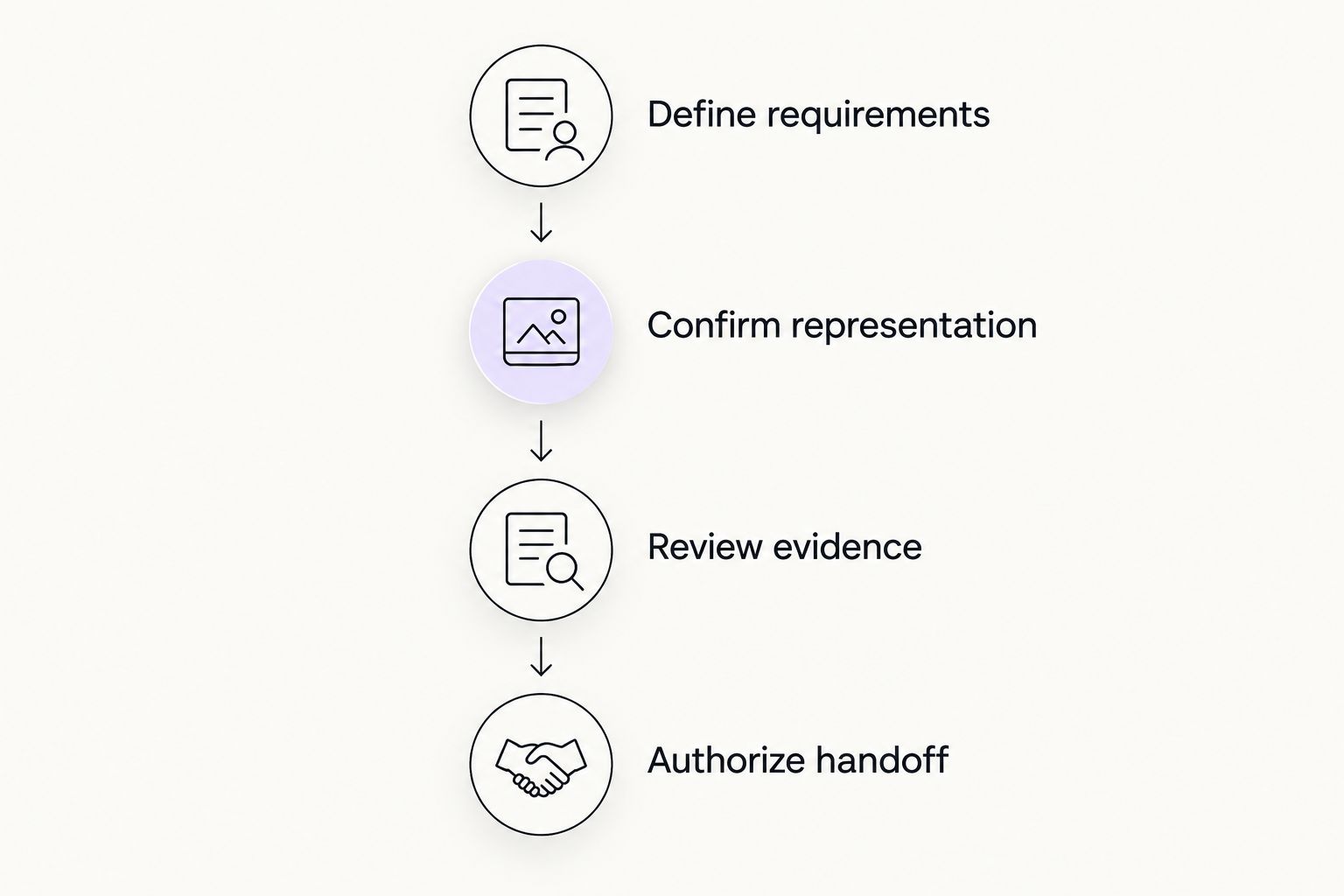
Use this sequence with any route:
- Define requirements. Separate mandatory features from preferences and explain how you intend to use the car.
- Confirm representation. Record whom each intermediary represents and what work the engagement includes.
- Review evidence. Examine records and arrange an independent inspection before removing relevant conditions.
- Authorize handoff. Confirm the agreed payment, document, insurance, and transport arrangements before release.
Separate permission to search from permission to commit. A coordinating contact should know which conversations can proceed and which decisions need your express approval. Owners should apply the same distinction to introductions and acceptance of terms.
Keep inspection independent of the introduction
Choose an inspector with relevant experience and agree on the inspection scope before the appointment. Ask what can be examined, what cannot, and how findings will be documented. Read the report before deciding which issues you accept.
Use the guide to what a pre-purchase supercar inspection should cover to prepare questions. Match the requested checks to the car and its intended use rather than assuming every inspection covers the same work.
Felipe Cimino, CEO and co-founder of SV Sourcing, has identified skipped pre-purchase inspections and international purchases among his firsthand concerns. These are observations, not a claim that every overseas transaction is unsafe. If a car crosses borders, establish the applicable import requirements and inspection arrangements before committing.
How the options are ranked
The ranking follows search fit, representation, evidence access, coordination, and discretion. Coordinated private sourcing comes first for buyers who want help across the transaction. The remaining routes address a narrow specification, an identified seller's car, or a buyer who wants direct control.
This is a decision framework, not a claim of measured success rates or guaranteed access. Compare the actual engagement against the work you need done.
Which off-market route should you choose?
Choose SV Sourcing when you want private exotic-car sourcing and deal coordination. Choose a marque-focused broker when specification knowledge drives the search. Use an owner's broker to evaluate an identified car, or buy directly when you are prepared to coordinate the transaction yourself.
Before starting your 2026 search, decide what you will not delegate: specification approval, acceptance of inspection findings, and authorization to proceed. Coordination should make those decisions clearer, not obscure them.
FAQ
What's the best off-market exotic car buying option?
The best route depends on whether you need a coordinated search, specification-focused help, or access to an already identified car. SV Sourcing fits buyers seeking private sourcing and one person coordinating the deal. Confirm the engagement scope before proceeding.
Does off-market mean a car is better than a publicly listed car?
No. Off-market describes the introduction, not the car's condition or ownership history. Review the records and arrange an independent pre-purchase inspection regardless of how you find the car.
Does an exotic-car broker represent the buyer or seller?
An exotic-car broker's role depends on the engagement. Ask whom the broker represents, who compensates the broker, and what authority the broker has. Do not treat a seller's representative as your own adviser.
Can I buy an exotic car privately from another state?
Yes, but establish the applicable title, registration, tax, insurance, and transport requirements before committing. Confirm the inspection arrangements and who controls each closing step. Distance does not remove the need for independent verification.
What should I give a private broker before the search starts?
Give the broker your required specification, budget boundaries, intended use, timing, and acceptable compromises. Identify the condition and documentation requirements that would stop a purchase. A clear brief helps prevent unsuitable introductions.
How can an owner sell privately without sharing everything publicly?
An owner can use controlled introductions and share information in stages. Establish who can receive photographs, records, and identifying details, while providing qualified buyers with the evidence needed to assess the car. Discretion should not block due diligence.
One last thing
A private introduction is not a reason to accelerate your approval. Decide your stopping conditions before the car appears: unresolved ownership, restricted inspection access, or material discrepancies between the description and records.
For a 2026 purchase, write those conditions into your brief. It is easier to enforce a rule you set before you want the car.